Unfinished Obelisk Aswan
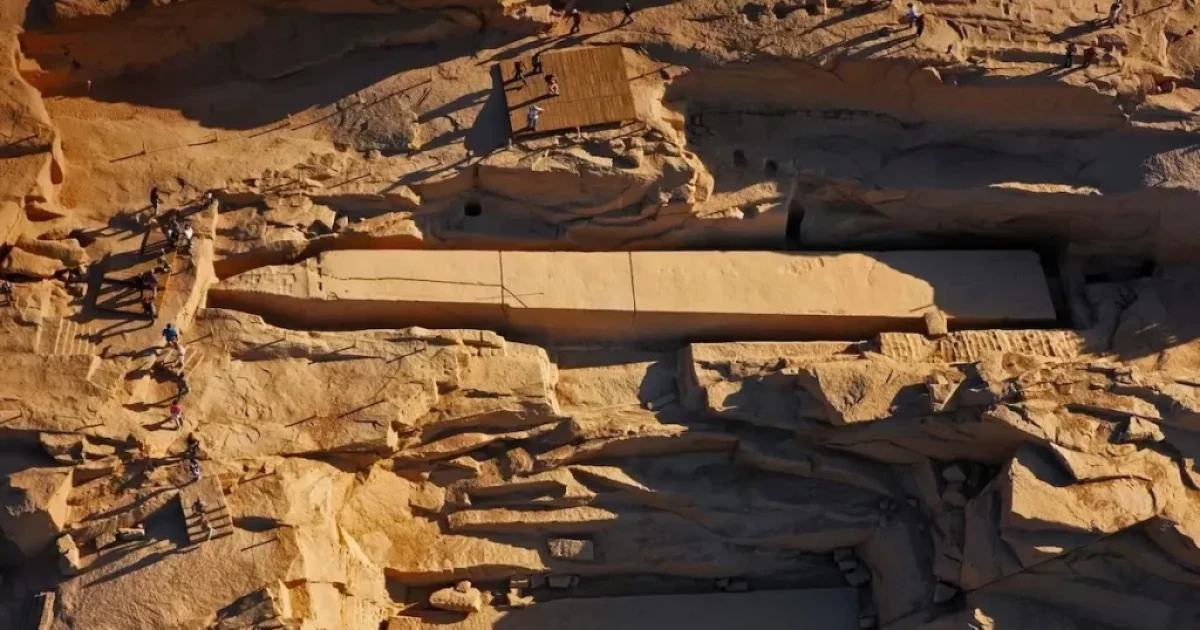
Table of Contents
The Unfinished Obelisk Aswan is one of the most fascinating archaeological sites in Egypt — a monument that was never completed but still reveals the incredible craftsmanship and ambition of ancient Egyptian builders.
Located in Aswan’s northern granite quarries, this colossal structure provides direct insight into how ancient Egyptians carved and transported their monumental obelisks, including those now standing in Luxor, Karnak, and even Rome.
For travelers exploring Things to Do in Aswan or Nile River Cruises, visiting the Unfinished Obelisk Aswan is an unmissable experience that connects modern visitors to the raw process of Egypt’s monumental past.
The Story Behind the Unfinished Obelisk
Discovery and Historical Context
The Unfinished Obelisk lies in the ancient granite quarries of Aswan, where much of Egypt’s monumental stonework originated. It was discovered partially carved from bedrock, revealing fascinating details about how ancient Egyptians extracted these massive monoliths.
Archaeologists believe the obelisk dates back to the reign of Queen Hatshepsut (18th Dynasty, around 1500 BCE). Had it been completed, it would have been the largest obelisk ever built, measuring about 42 meters (137 feet) tall and weighing around 1,200 tons.
Unfortunately, the stone cracked during excavation, forcing workers to abandon it — leaving behind an open-air workshop frozen in time.
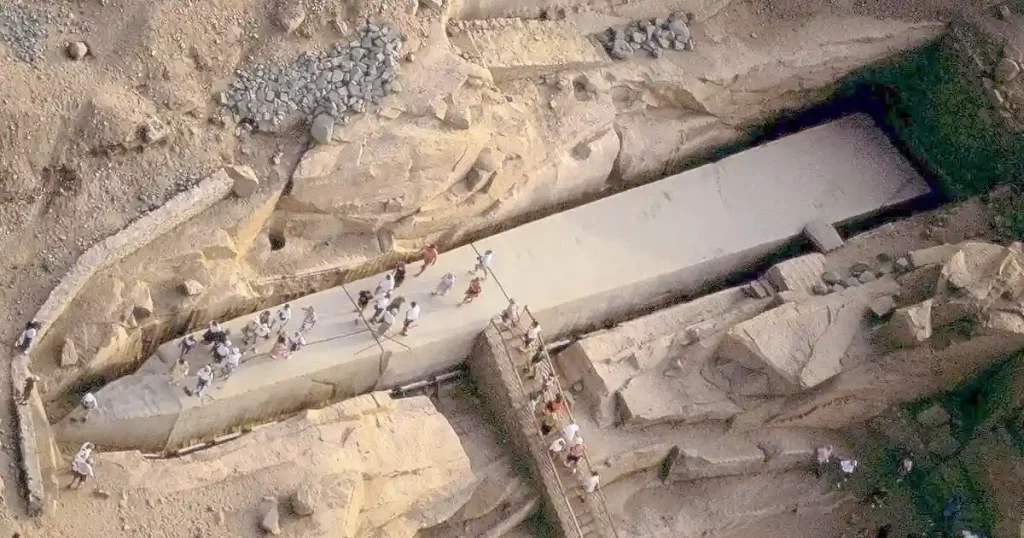
Unfinished Obelisk Aswan: showing the massive granite monument still attached to bedrock
Significance
This site is often referred to as “the museum of ancient techniques.” It shows, better than any other place, how ancient stonemasons worked with granite using tools far simpler than what we have today — yet achieved astonishing precision.
Quick Visitor Information
ItemDetailsLocationNorthern Granite Quarries, near Aswan city center, EgyptOpening HoursDaily: 8:00 AM – 4:00 PMTicket Price (Foreign Visitors)EGP 160Ticket Price (Egyptians/Arabs)EGP 20Recommended Visit Duration45 minutes – 1 hourHow to Get ThereTaxi from downtown Aswan or as part of Aswan Day ToursOfficial Sourceegymonuments.gov.eg
The Ancient Quarry Site: A Glimpse into Egyptian Engineering
Walking through the Unfinished Obelisk Aswan site feels like stepping directly into an ancient construction zone.
Massive granite walls surround the area, dotted with marks of ancient chisels and tool lines. The obelisk itself remains half-attached to the bedrock, lying in a deep trench carved by hand thousands of years ago.
Visitors can clearly see the cracks that caused the project to be abandoned — these natural fractures in the granite make it easy to understand the immense challenges the builders faced.
How the Obelisks Were Made
The unfinished monument offers rare evidence of the exact techniques used by ancient stonecutters.
Carving Process
Marking the Outline: The workers traced the desired dimensions directly onto the granite surface.
Creating Trenches: Using dolerite balls — harder than granite — they pounded out deep trenches around the outline.
Undercutting: Once the sides were freed, workers began separating the base from the bedrock using wooden wedges soaked in water to expand and crack the rock.
Polishing & Transport: After extraction, the obelisk would have been polished and transported to the Nile for shipment to its final temple.
The Unfinished Obelisk Aswan preserves each of these stages visibly, giving modern visitors a unique archaeological classroom in the open air.
Why the Obelisk Was Never Completed
A deep crack appeared near the base during the final stages of carving, making the monument structurally unsound. The ancient workers halted the project immediately.
The failure, however, became a success for modern archaeology — offering the only surviving direct evidence of ancient Egyptian quarrying methods.
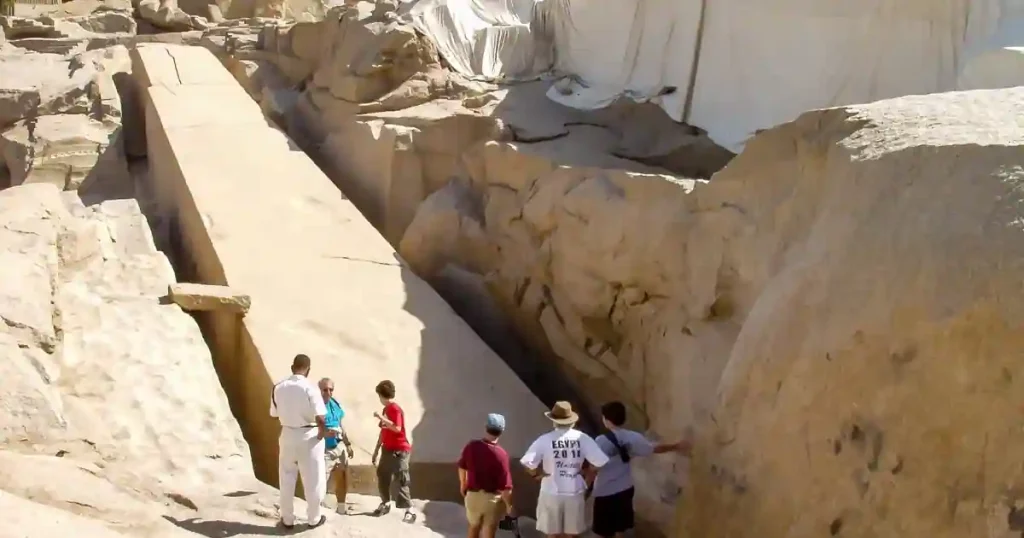
Unfinished Obelisk Aswan: showing the massive granite monument still attached to bedrock
Visiting Experience and What to Expect
The Unfinished Obelisk site is open-air and straightforward to explore. Here’s what to expect during your visit:
Entrance Area: Small ticket booth and shaded path.
Walkways & Railings: Secure viewing platforms allow you to look directly down at the obelisk.
Interpretive Signs: Informative panels explain the stages of stone extraction.
Panoramic View: The top section gives a stunning overview of Aswan’s granite hills.
Short Duration: Most visitors spend about 45 minutes exploring.
If you’re visiting as part of Aswan Day Tours, the site is often combined with Philae Temple and the Aswan High Dam— forming the “Three Wonders of Aswan” itinerary.
How to Reach the Unfinished Obelisk Aswan
By Taxi: The quarry is only 10–15 minutes from Aswan’s city center.
By Private Tour: Almost every guided Aswan Day Tour includes this stop.
By Cruise Excursion: Those on Nile River Cruises, Luxor Nile Cruises, or Aswan Nile Cruises can include it as part of their Aswan sightseeing program.
On Foot: Not recommended in the heat, as the route involves uphill walking and limited shade.
Best Time to Visit
The best time to visit Aswan and its archaeological sites is between October and April, when temperatures are pleasant (20–28°C).
Try to visit the Unfinished Obelisk in the early morning or late afternoon for comfortable weather and soft lighting that highlights the granite’s colors.
Combine It With Other Attractions in Aswan
If you’re planning your Things to Do in Aswan list, here’s how the Unfinished Obelisk fits perfectly:
Aswan High Dam – a symbol of modern Egypt.
Philae Temple – dedicated to the goddess Isis, reachable by boat.
Nubian Museum – exploring Nubian heritage and relocated artifacts.
Elephantine Island – historical temples and local Nubian life.
Botanical Gardens – lush escape on Kitchener’s Island.
Together, these sites provide a complete look at Aswan’s unique blend of ancient, natural, and modern marvels.
Importance to Egyptology and Global History
The Unfinished Obelisk Aswan remains one of the most studied artifacts in Egyptology. It solved many mysteries about:
Tool marks and the use of dolerite pounding stones.
Quarrying sequences and labor organization in ancient Egypt.
Transportation methods, suggesting how finished obelisks were floated down the Nile to temples like Karnak and Luxor.
The monument also demonstrates how failures in ancient engineering became invaluable windows into human history.
Insight into Hatshepsut’s Ambition
Most scholars agree that Queen Hatshepsut ordered the obelisk to be erected in Karnak Temple in Thebes (modern Luxor), to honor the god Amun-Ra.
If completed, it would have stood taller than any obelisk in Egypt — surpassing those still standing today.
This makes it a critical link between Aswan’s granite quarries and Luxor’s grand temples, perfectly connecting it to Luxor Nile Cruises that follow this same historical route along the Nile.
Tips for Visitors
Wear comfortable walking shoes — the site involves stone paths and slight inclines.
Bring sunscreen, water, and a hat (no shade available).
Combine the visit with other morning excursions before the midday heat.
Hire a local Egyptologist guide to understand the quarrying techniques in depth.
Don’t miss the smaller unfinished columns nearby — they show other stages of quarrying.
Carry cash for entry tickets and small purchases; card payments may not be accepted.
Educational Value and Visitor Impressions
Many travelers describe the Unfinished Obelisk Aswan as a “hidden gem” — less crowded than temples but deeply impressive.
The site’s simplicity and authenticity create a strong emotional impact, especially for those fascinated by ancient craftsmanship.
It’s also a favorite stop for archaeology enthusiasts, photographers, and families seeking an educational experience.
Connection to Nile River Cruises
For travelers sailing on Nile River Cruises, the Unfinished Obelisk often marks one of the first stops in Aswan.
The quarries’ granite was used for many monuments you’ll see along your journey — including the temples of Luxor, Karnak, and Kom Ombo.
This makes it a meaningful start or end point for both Aswan Nile Cruises and Luxor Nile Cruises, linking ancient engineering directly to the living river route that defined Egypt’s civilization.
FAQs – Visitors’ Common Questions
Why is the Unfinished Obelisk famous?
Because it’s the largest known ancient obelisk ever attempted — and left unfinished, showing unique quarrying methods.
Is it worth visiting?
Yes, especially for history lovers or anyone curious about how ancient Egyptians built their temples and monuments.
How long does a visit take?
Around 45 minutes to an hour.
When is the best time to visit?
Morning before 10 AM or after 3 PM to avoid high temperatures.
Is there an entrance fee?
Yes — a small ticket is required (see the info table above).
Can I visit it from a cruise ship?
Yes. It’s part of most Aswan Day Tours offered for cruise passengers.
What should I wear?
Light, breathable clothing, sun protection, and comfortable shoes.