Sobek Temple
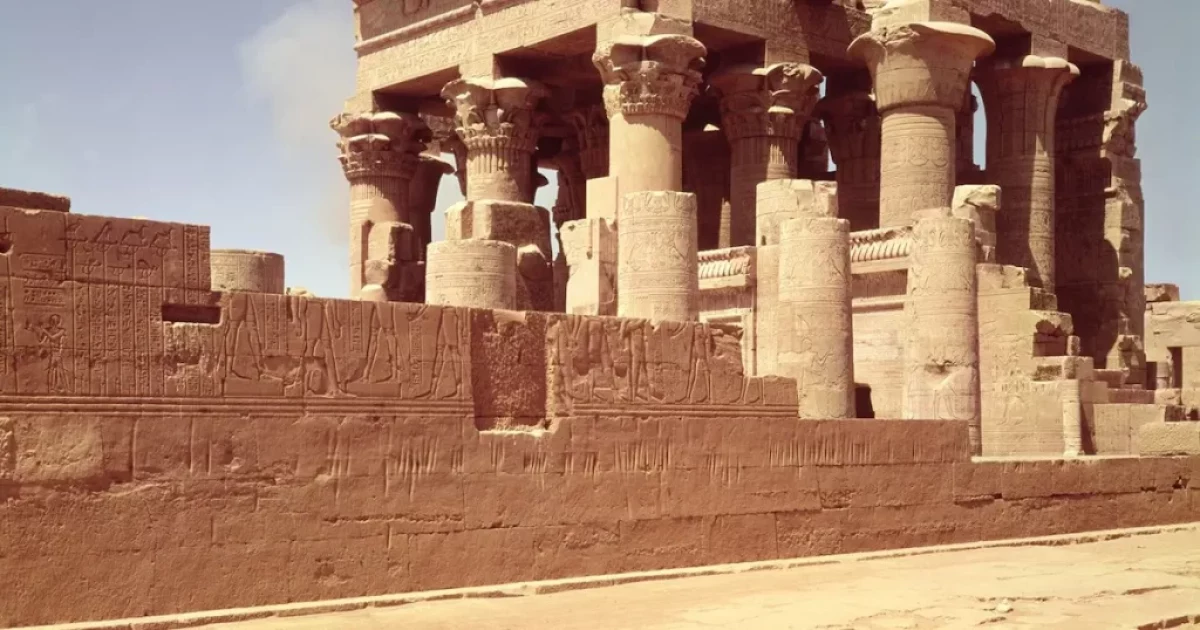
Table of Contents
In the golden sands of Upper Egypt, where the Nile carves its way between rocky cliffs and palm groves, stands one of the most fascinating temples ever built — the Sobek Temple Egypt.
Dedicated to Sobek, the crocodile god of the Nile, strength, and fertility, this ancient sanctuary offers a captivating mix of mythology, architecture, and natural beauty.
For travelers cruising along the river on Nile River Cruises, or Luxury Nile Cruises, Sobek Temple (also known as Kom Ombo Temple) is an essential stop — a place where faith, fear, and the forces of nature meet in perfect harmony.
Who Was Sobek – The Crocodile God of Ancient Egypt
Before you step inside Sobek Temple Egypt, it’s worth understanding who Sobek was.
Sobek was one of Egypt’s most powerful deities, worshiped since the Old Kingdom (around 2600 BCE).
He represented the Nile’s life-giving waters — and its dangers. Crocodiles were both revered and feared, embodying Sobek’s dual nature: protector and predator.
Symbolism of Sobek
Protection: Sobek defended Egypt’s pharaohs from chaos and evil.
Fertility: He symbolized the abundance brought by the Nile’s annual flood.
Power: As a crocodile, Sobek was fierce yet sacred, commanding both respect and devotion.
Many kings adopted Sobek as their patron deity, hoping his strength would guide them in battle and governance.
The History of Sobek Temple Egypt
Origins in the Ptolemaic Period
The Sobek Temple Egypt, located in Kom Ombo, was constructed during Egypt’s Ptolemaic Dynasty (180–47 BCE). It was later expanded during Roman rule.
Sobek Temple Egypt overlooking the Nile River at Kom Ombo
The site was chosen carefully — a bend in the Nile where crocodiles once basked in the sun.
Dual Dedication: Sobek and Horus the Elder
What makes this temple unique is that it was shared between two gods:
Sobek, the crocodile god
Horus the Elder (Haroeris), the falcon god of light
This dual dedication represents Egypt’s concept of balance and duality — where strength and wisdom coexist.
Quick Visitor Information
ItemDetailsLocationKom Ombo, 48 km north of Aswan, EgyptOpening HoursDaily: 8:00 AM – 5:00 PMTicket Price (Foreign Adults)EGP 200Ticket Price (Egyptians/Arabs)EGP 20Recommended Visit Duration1–1.5 hoursHow to Get ThereIncluded in most Aswan Day Tours or accessible by Nile CruisesOfficial Sourceegymonuments.gov.eg
Architectural Design and Layout
The Sobek Temple Egypt is one of the most symmetrical structures in ancient Egypt. It was deliberately designed as a twin temple, with two identical halves:
one for Sobek, one for Horus.
Key Architectural Features
Twin Entrances: Separate gateways for each god.
Dual Sanctuaries: Each side has its own altar and shrine.
Hypostyle Hall: Rows of towering columns decorated with lotus and papyrus motifs.
Reliefs: Detailed carvings of pharaohs making offerings to Sobek and Horus.
Sobek Temple Egypt overlooking the Nile River at Kom Ombo
The temple’s symmetry symbolizes Egypt’s pursuit of Maat — cosmic balance.
Sacred Carvings and Reliefs
The walls of the Sobek Temple Egypt reveal fascinating stories of devotion and science.
Medical Reliefs
One of the temple’s most famous carvings depicts ancient surgical instruments — scalpels, forceps, and medicine jars — proving Egypt’s advanced medical knowledge.
Ritual Scenes
Sobek is often shown with a crocodile head on a human body, receiving offerings from pharaohs. Nearby panels depict processions, coronations, and blessings of fertility.
Astronomical Reliefs
Ceiling carvings show star maps and zodiac symbols introduced during the Greco-Roman period, merging Egyptian spirituality with Hellenistic astronomy.
The Crocodile Mummies of Sobek
Next to the temple lies the Crocodile Museum, a small but extraordinary exhibition showcasing over 50 mummified crocodiles discovered nearby.
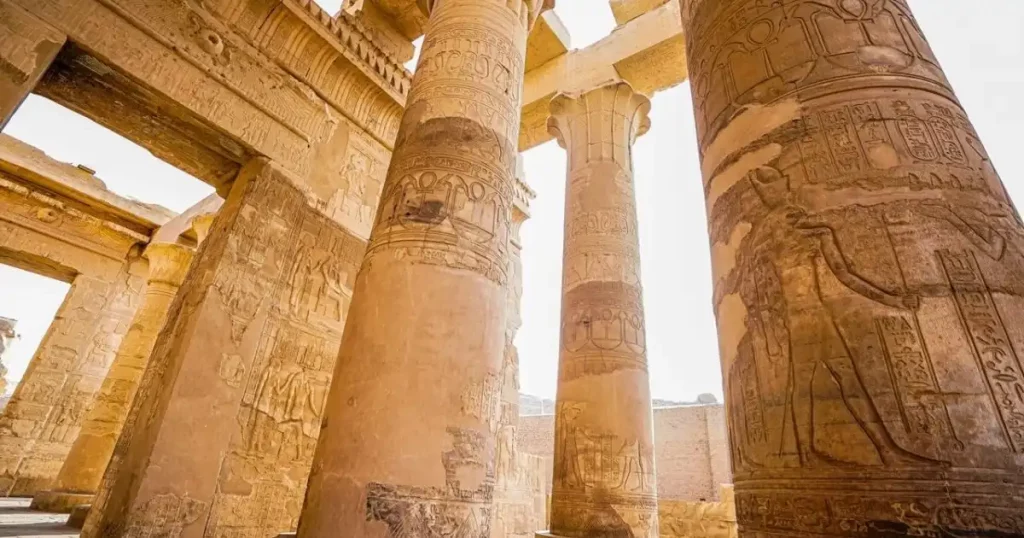
Sobek Temple Egypt overlooking the Nile River at Kom Ombo
These mummies vary in size — from baby crocodiles wrapped in linen to fully grown creatures several meters long.
Ancient priests raised and cared for crocodiles in sacred ponds, later mummifying them as offerings to Sobek.
The museum includes:
Mummified crocodiles and eggs
Ancient offerings and carvings
Educational displays explaining crocodile worship
It’s a fascinating stop for both adults and children, making it one of the highlights of Things to Do in Aswan.
Mythology: The Power and Paradox of Sobek
In mythology, Sobek was both protector and destroyer.
He controlled the waters that gave Egypt life, yet those same waters could flood and destroy.
Sobek’s Dual Nature
Beneficent Aspect: He ensured fertile lands and safe journeys across the Nile.
Malevolent Aspect: He represented chaos, symbolizing the Nile’s unpredictable force.
Egyptians didn’t see this contradiction as negative — they viewed Sobek as balance incarnate, an essential part of the world’s harmony.
Rediscovery and Preservation
Archaeologists rediscovered Sobek Temple Egypt in the 19th century.
Much of it was buried under sand and damaged by Nile floods.
Extensive restoration by Egyptian authorities and UNESCO has preserved the structure beautifully.
Today, floodlights illuminate the temple at night, creating a mesmerizing view for travelers aboard Luxury Nile Cruises.
Visiting Experience: What to Expect
When visiting Sobek Temple Egypt, expect an atmosphere that blends serenity and awe.
Sound: The gentle lapping of the Nile beside ancient stones.
View: The temple glows gold at sunset.
Feeling: A sense of balance — power and peace united in stone.
Visitors can freely explore the columns, reliefs, and open courtyards.
Knowledgeable guides share legends about Sobek’s worship and the meaning behind each carving.
How to Reach Sobek Temple Egypt
Most visitors arrive as part of Aswan Day Tours or Nile Cruises.
By Cruise
All Nile River Cruises between Luxor and Aswan stop at Kom Ombo for around one hour.
By Road
You can also reach Kom Ombo by car or taxi from Aswan in 45 minutes.
By Train
Regular trains between Aswan and Luxor stop at Kom Ombo station, just 10 minutes from the temple.
Whichever route you take, the journey itself — passing through Nile-side villages and golden fields — is part of the experience.
The Best Time to Visit
Visit the Sobek Temple Egypt between October and April, when the weather is cooler and more comfortable.
Sunset is particularly magical, as the sandstone glows against the blue Nile, offering one of Egypt’s most breathtaking sights.
Link with Nile River Cruises and Aswan Day Tours
The temple is an essential stop for travelers exploring Upper Egypt through Nile Cruises or Luxury Nile Cruises.
Why It’s Special for Cruise Travelers
Compact site: easy to explore in one hour
Stunning river views
Close proximity to Edfu and Aswan
It’s also a featured highlight on most Aswan Day Tours, offering insight into Egypt’s dual religious traditions.
If you’re compiling your list of Things to Do in Egypt or Things to Do in Aswan, Sobek Temple deserves a top spot.
Cultural and Religious Significance
Sobek Temple reflects Egypt’s enduring relationship with the Nile.
Every carving, statue, and inscription honors the river’s dual role as giver and taker of life.
By worshiping Sobek, Egyptians acknowledged nature’s power — not to control it, but to respect it.
This philosophy resonates even today, reminding visitors that Egypt’s greatness has always flowed with the Nile.
Nearby Attractions
After visiting Sobek Temple Egypt, consider exploring:
Edfu Temple – dedicated to Horus, Sobek’s divine counterpart
Aswan High Dam – symbol of modern Nile control
Philae Temple – dedicated to the goddess Isis
Unfinished Obelisk – quarry where ancient stonecraft began
Nubian Villages – colorful riverfront communities full of life and culture
These nearby sites together form a rich tapestry of experiences in Aswan and along the Nile.
Practical Visitor Tips
Wear comfortable shoes — the temple floors are uneven.
Bring water and sun protection — shade is limited.
Hire a local guide to appreciate the stories behind the carvings.
Avoid midday visits for cooler temperatures and better photos.
Don’t miss the Crocodile Museum, right next to the main temple.
Night Visits
Some Luxury Nile Cruises include night visits to Sobek Temple.
Under floodlights, the temple appears mystical — its carvings casting long shadows, its columns glowing in amber light.
It’s one of the most photogenic and peaceful experiences on the river.
FAQs – Visitors’ Common Questions
Q1. Where is Sobek Temple located?
In Kom Ombo, about 48 km north of Aswan, on the east bank of the Nile River.
Q2. What is Sobek known for?
Sobek is the ancient Egyptian crocodile god representing strength, fertility, and protection.
Q3. What makes Sobek Temple unique?
It’s a dual temple dedicated to both Sobek and Horus, with perfect architectural symmetry.
Q4. What are the crocodile mummies?
Over 50 mummified crocodiles found near the temple, now displayed in the Crocodile Museum.
Q5. How do I visit Sobek Temple?
Most Nile River Cruises and Aswan Day Tours include it as a scheduled stop.
Q6. How long should I spend there?
Around 1 to 1.5 hours to explore the temple and museum.
Q7. Is photography allowed?
Yes, except inside the Crocodile Museum where flash is prohibited.
Why Sobek Temple Egypt Is a Must-See
The Sobek Temple Egypt is more than an archaeological site — it’s a symbol of life’s balance between chaos and order.
It tells the story of a civilization that saw divinity in the river, wisdom in its creatures, and eternity in its stone.
Whether you’re sailing through Nile Cruises, joining Aswan Day Tours, or curating your list of Things to Do in Egypt, Sobek Temple offers an experience both spiritual and spectacular.
It’s not just the temple of a crocodile god — it’s a reflection of the eternal heartbeat of Egypt itself.