Luxor Temple – Complete Guide to Egypt’s Ancient Wonder
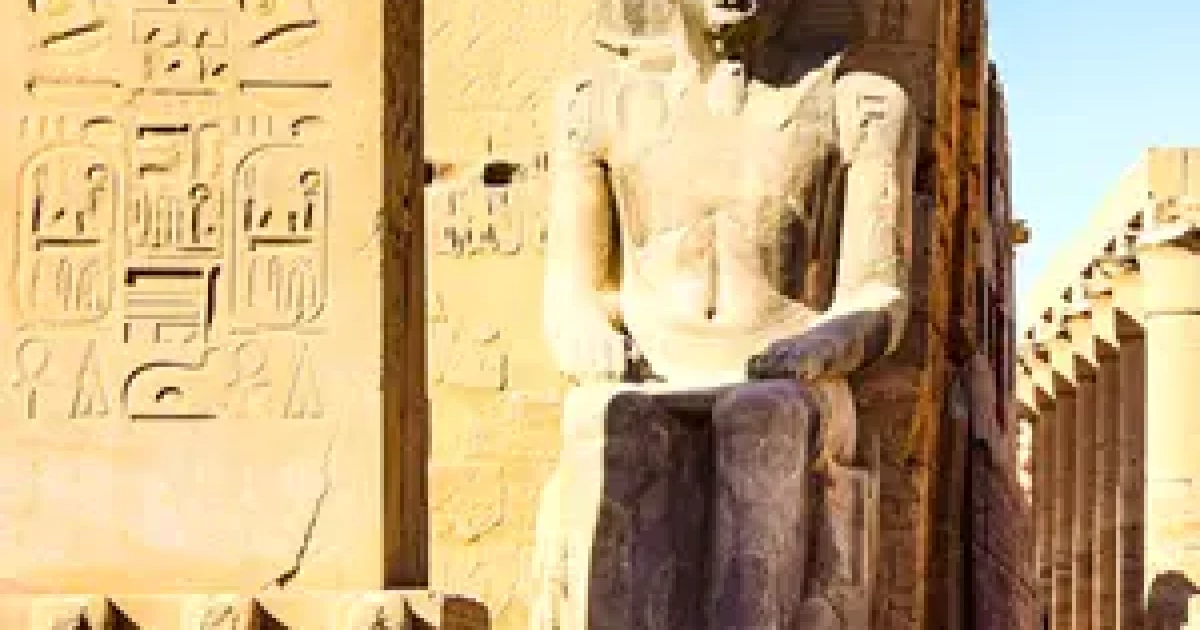
Table of Contents
Introduction
Nestled in the heart of modern Luxor, but reaching deep into Egypt’s pharaonic past, the Temple of Luxor is one of the must-see highlights on any itinerary of Things to Do in Egypt and especially Things to Do in Luxor. Built over centuries and richly decorated, this temple offers a living window into Egypt’s religious, political, and cultural traditions. In this guide, you’ll find in-depth history, architectural details, visitor logistics, tips, and answers to common traveler questions.
Luxor Temple – Temple of Luxor in Egypt
History & Significance of Luxor Temple
Construction Phases & Key Builders
The original core of the temple was commissioned by Amenhotep III around 1390 – 1352 BC.
After his death, subsequent pharaohs such as Tutankhamun, Horemheb, and Ramses II expanded or decorated parts of the structure.
In later eras, including the Ptolemaic and Roman periods, additions like a granite shrine to Alexander the Great were incorporated.
Religious & Cultural Role
Luxor Temple was not primarily a funerary temple but more a place for royal ritual and rejuvenation of kingship.
During the annual Opet Festival, statues of Amun, Mut, and Khonsu would be transported from Karnak to Luxor along a sphinx-lined avenue.
The name in ancient Egyptian was Ipet Resyt meaning “southern sanctuary.”
Luxor Temple thus bridges political power, ritual performance, and architectural grandeur, right in the modern cityscape.
Architectural Highlights & Layout
Walking through Luxor Temple is like touring a chronological tapestry of Egyptian architectural styles. Key features include:
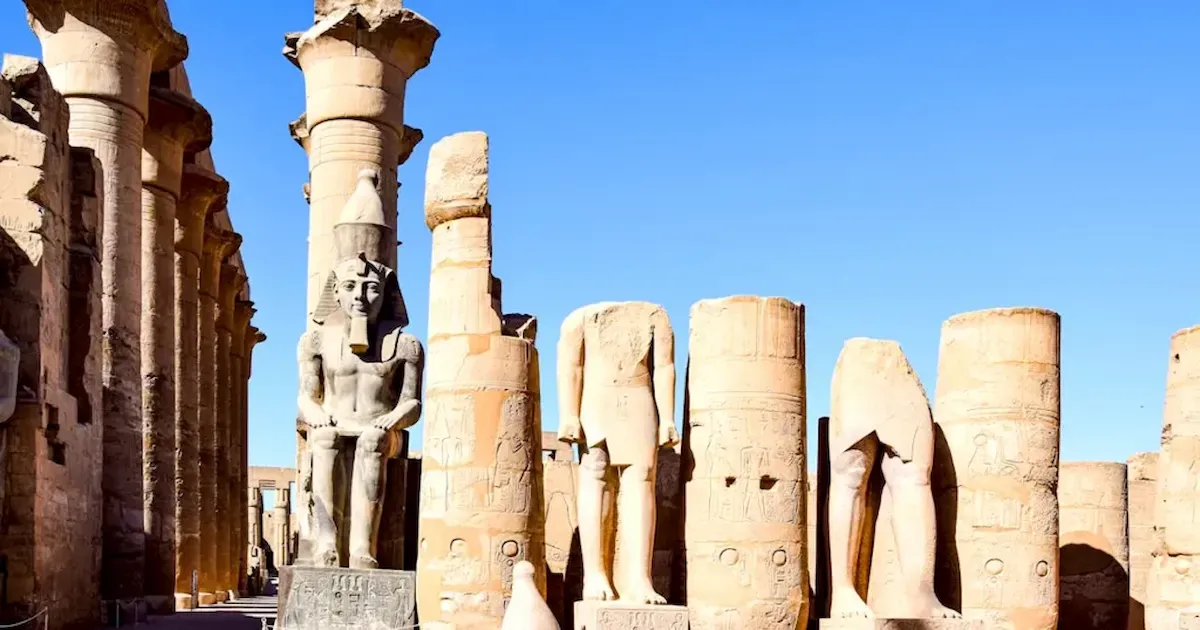
The entrance pylon and courtyard: Flanked by two obelisks (one now in Paris) and large statues.
Hypostyle halls: With rows of papyrus-cluster columns and reliefs depicting pharaohs, gods, and rituals.
Inner sanctuaries and shrines: Including the granite shrine to Alexander the Great.
Decorative reliefs & inscriptions: Scenes of offerings, military campaign victories, religious symbolism.
Alignment with the Nile and processional way (now mostly lost): The temple once connected via a sphinx avenue to Karnak Temple.
Because of its successive additions, Luxor Temple offers a mini-timeline of New Kingdom to Ptolemaic architectural evolution.
Visitor Logistics: Hours, Tickets, & Access
Below is a practical table summarizing the key visitor info you need before planning your visit:
ItemDetailOpening HoursDaily 6:00 AM until 8:00 PM (some sources list last entry 7:00 PM)Ticket Price (Foreigners)~ EGP 500 for adults, EGP 250 for studentsTicket Price (Egyptians / Arabs)EGP 40 for adults, EGP 20 for studentsAddress / LocationCorniche El Nile, Luxor City, Luxor Governorate, EgyptLast Entry / ClosingSome skip-the-line sources allow entry until 9:00 PM with closing at 10:00 PMNotesTickets often include part of the Sphinx Avenue / “Kabbash Road” concession
Note: Multiple sources sometimes show slightly different times or prices (e.g. EGP 400 in some tour listings). Always verify locally or via official Egyptian Monuments site.
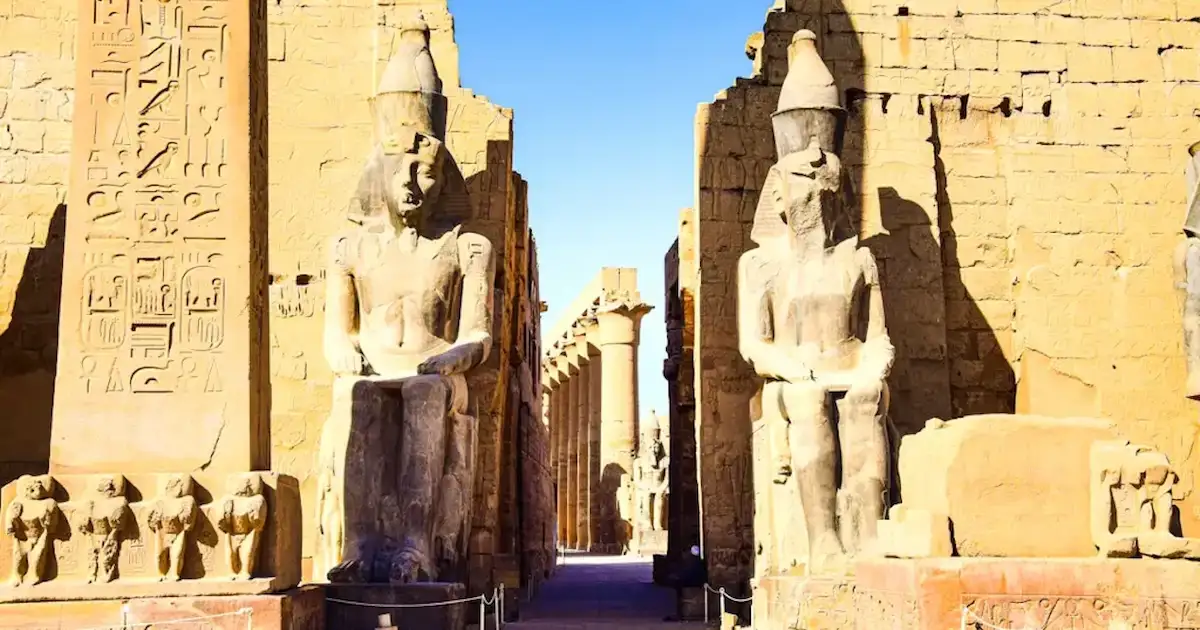
Luxor Temple – Temple of Luxor in Egypt
Best Time to Visit & Tips for an Optimal Experience
Morning or late afternoon: To avoid midday heat and harsh light on relief surfaces.
After sunset lighting: Many visitors love to see the temple illuminated at night — it becomes magical under lights.
Guided tours: Hire a licensed Egyptologist guide (often available at the entrance). They can point out narrative details you’d otherwise miss.
Photography permit: Check whether an additional photography ticket is needed (sometimes required for using tripods or professional gear).
Dress respectfully: As with any religious/historic site in Egypt, dress modestly (shoulders, knees covered) and wear comfortable walking shoes.
Combine nearby attractions: Since Luxor Temple is in town, you can pair it with a Luxor day tour (see more in your Luxor day tours page) or visit Karnak Temple which lies ~3 km north.
Stay hydrated: Bring water, sunscreen, and a sun hat — Luxor’s sun can be intense.
How to Reach Luxor Temple
If you’re staying in central Luxor, the temple is often within walking distance (on the east bank of the Nile).
From a Nile cruise dock or hotel, taxis, rickshaws (tuk-tuks), or hotel shuttles can drop you.
Many Luxor day tours include pickup from your hotel and drop at the temple. (You can link here: Luxor day tours).
Ensure your driver takes you via the Corniche route for best views.
Nearby Attractions You Can Combine (On East & West Bank)
Karnak Temple Complex (just ~3 km away) — must-visit, perhaps link “Things to Do in Luxor” page.
Avenue of the Sphinxes (ancient processional way linking Luxor and Karnak) — partly reconstructed.
Cross to West Bank to visit Valley of the Kings, Mortuary Temple of Hatshepsut, Colossi of Memnon, and more.
Many day tours in Luxor combine multiple sites in one day — check our page for suggestions.
Why Luxor Temple Deserves A Visit
It’s centrally located in Luxor, making it highly accessible.
Richly preserved reliefs and statues despite centuries of changes.
Offers an immersive experience of ancient Egyptian ritual life.
It’s often less crowded than Karnak yet deeply rewarding.
The night illumination adds a dramatic magical ambiance.
With that, the Temple of Luxor is a crown jewel in the Things to Do in Egypt journey, and a cornerstone of Things to Do in Luxor.
Questions Travelers Always Ask (FAQs)
How long should I spend at Luxor Temple?
Around 1 to 1.5 hours is sufficient for a decent walk-through with a guide. You could linger longer if you enjoy inscriptions and photography.
Is night visit allowed / recommended?
Yes, the temple is sometimes open into the evening and lit impressively. However, last entry times vary so confirm locally.
Is Luxor Temple accessible for people with limited mobility?
The site has uneven stone floors, steps, and narrow corridors. Assistance might be needed; the guide or your tour operator can help.
Are there restrictions on cameras or tripods?
Sometimes you need to purchase a permit for advanced equipment. Use your mobile or standard camera without issues in most cases. Confirm at the ticket booth.
Can I visit both Karnak and Luxor Temples in one day?
Absolutely — they are close and many day tours combine both. It’s a very popular pairing.
What’s the difference between Luxor Temple and Karnak Temple?
Karnak is larger and more sprawling; Luxor is more compact but more walkable and intimately decorated. Both complement each other in telling ancient Theban history.
Is the Sphinx Avenue open fully between Luxor & Karnak?
Only parts have been restored; the entire stretch is not fully accessible yet. Some sections are open to visitors.