Kom Ombo Temple Egypt
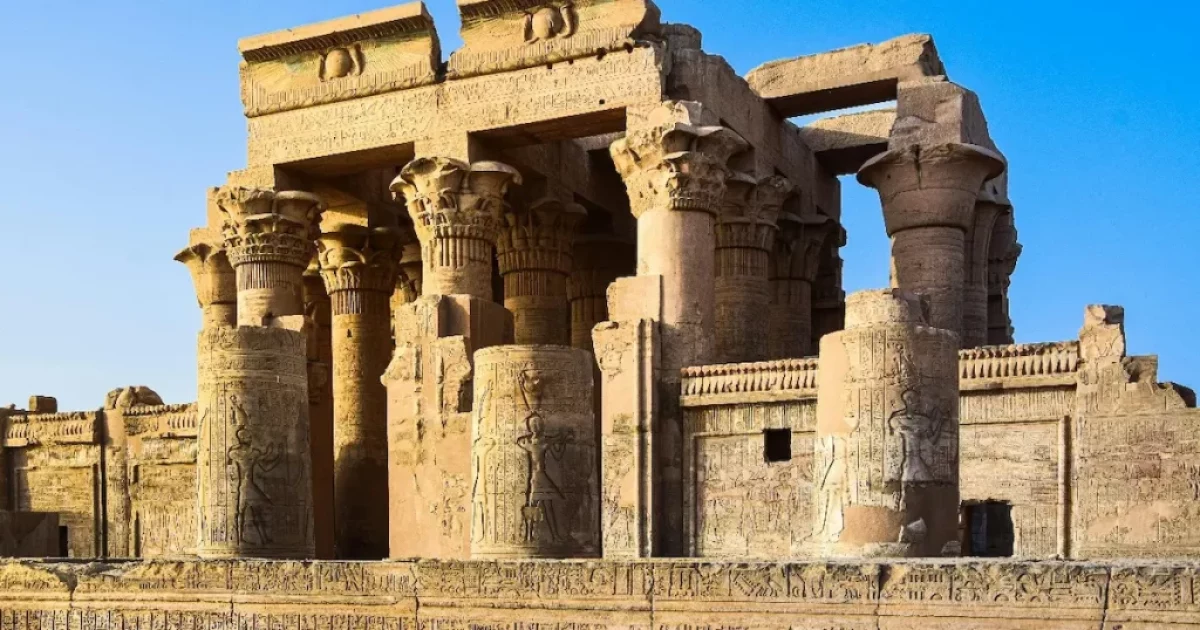
Table of Contents
Few places in Egypt captivate travelers quite like Kom Ombo Temple Egypt, a magnificent riverside sanctuary that celebrates both the falcon god Horus and the crocodile god Sobek.
Perched on a graceful bend of the Nile, this dual temple offers a rare glimpse into Egypt’s complex spirituality and balance between good and evil, light and darkness, protection and fertility.
For anyone sailing on Nile River Cruises, Luxury Nile Cruises, or Nile Cruises, Kom Ombo is an essential stop — a perfect blend of myth, artistry, and mystery.
The History of Kom Ombo Temple Egypt
Origins and Purpose
The Temple of Kom Ombo was constructed during the Ptolemaic Dynasty (around 180–47 BCE), with additions made during the Roman era.
Its name comes from “Kom” meaning hill and “Ombo” meaning gold — thus, “Hill of Gold.” The temple was built on a strategic point overlooking the Nile, where crocodiles once basked on the riverbanks.
Kom Ombo Temple Egypt at sunset with Nile River background
The temple’s most unique feature is its dual dedication:
Sobek, the crocodile god, symbolizing strength, fertility, and protection.
Horus the Elder, representing kingship, light, and divine order.
This symmetry reflects ancient Egyptian concepts of cosmic balance — every light has its shadow, every good its challenge.
Quick Visitor Information
ItemDetailsLocationKom Ombo Town, 48 km north of Aswan, EgyptOpening HoursDaily: 8:00 AM – 5:00 PMTicket Price (Foreign Visitors)EGP 200Ticket Price (Egyptians/Arabs)EGP 20Recommended Visit Duration1 to 1.5 hoursHow to Get ThereAccessible by Nile Cruises or car from AswanOfficial Sourceegymonuments.gov.eg
Architectural Design: A Perfect Symmetry
Unlike any other temple in Egypt, Kom Ombo Temple Egypt was built in perfect symmetry — literally two temples in one.
Each half mirrors the other:
Twin sanctuaries
Twin entrances
Twin halls
Layout
Visitors enter through a grand pylon adorned with scenes of the pharaoh making offerings to both Sobek and Horus. Inside, two identical sets of chambers unfold side by side.
One side belongs to Sobek, god of the Nile’s crocodiles; the other belongs to Horus the Elder, symbol of light and divine kingship.
The architectural harmony reflects Egypt’s devotion to Maat, the principle of universal balance.
The Temple’s Reliefs and Symbolism
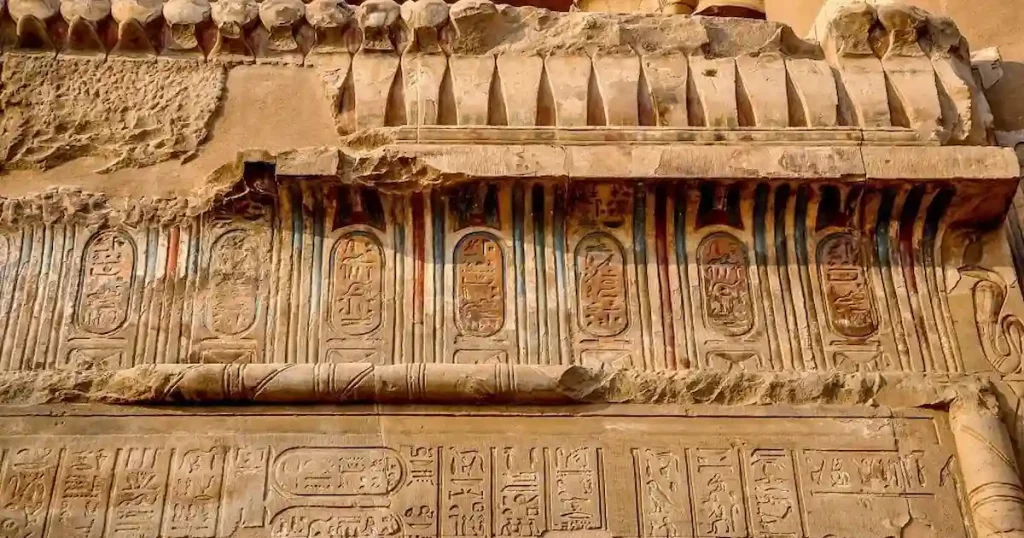
The walls of Kom Ombo Temple Egypt are covered with beautifully preserved carvings that tell stories of medicine, mythology, and daily life.
Medical Reliefs
One of the temple’s most fascinating features is the medical wall relief, showing ancient surgical instruments such as scalpels, forceps, and medicine jars.
This carving demonstrates Egypt’s advanced understanding of healthcare — making Kom Ombo one of the world’s earliest “medical temples.”
Religious Scenes
The reliefs depict offerings to Sobek and Horus, processions of priests, and astronomical symbols. The art style blends Greek influence with traditional Egyptian motifs.
The Nile Connection
Crocodiles, once sacred to Sobek, swam freely in this area of the Nile. Ancient priests believed their presence protected Egypt from droughts and ensured the river’s fertility.
The Temple of Sobek: Crocodile God of the Nile
Symbolism of Sobek
Sobek represented the powerful and unpredictable aspects of the Nile. His cult thrived during times when the river’s floods determined life or death for farmers.
Worshippers prayed to Sobek for protection from crocodiles and fertile waters to sustain the land.
Crocodile Mummies and the Crocodile Museum
Next to the main temple lies the Kom Ombo Crocodile Museum, where visitors can see mummified crocodiles, eggs, and artifacts found near the temple.
The Crocodile Museum is one of Egypt’s most unique attractions — a blend of archaeology and fascination that appeals to both adults and children.
Kom Ombo Temple Egypt at sunset with Nile River background
If you search for Kom Ombo Temple crocodiles, this is exactly where your curiosity leads — dozens of preserved crocodiles displayed with detailed explanations about their role in ancient Egyptian belief.
The Temple of Horus the Elder
While Sobek embodies nature’s might, Horus the Elder (Haroeris) symbolizes divine kingship and protection.
His half of the temple represents light, order, and balance — complementing Sobek’s watery chaos.
Visitors can see reliefs showing Horus crowned with the double crown of Upper and Lower Egypt, signifying unity and peace.
Together, the twin temples express Egypt’s cosmic philosophy — the eternal harmony of opposites.
Rediscovery and Preservation
After centuries of neglect, Kom Ombo Temple Egypt was excavated in the late 19th century by French archaeologists.
Because the temple was built on the Nile’s edge, parts of it suffered erosion and flooding, but major restoration work has preserved its structure.
Today, floodlights illuminate the temple at night, creating one of the most magical evening scenes along the Nile — a favorite stop for passengers on Nile Cruises and Luxury Nile Cruises.
Visiting Experience: What to Expect
Atmosphere: Peaceful, with the sound of the Nile flowing beside the temple.
Best Time: Early morning or sunset, when golden light enhances the carvings.
Crocodile Museum: A short, air-conditioned gallery with real mummified crocodiles.
Photo Opportunities: The twin columns, hieroglyphs, and riverside backdrop make it one of the most photogenic temples in Egypt.
Guided Tours: Egyptologist guides offer in-depth explanations of Sobek’s myths and Horus’s rituals.
How to Reach Kom Ombo Temple
Most visitors arrive via Nile River Cruises, which stop at Kom Ombo for 1–2 hours.
Other Options:
By Car: 45 minutes north of Aswan.
By Train: Kom Ombo railway station connects Aswan and Luxor.
Aswan Day Tours: Many tours combine Kom Ombo Temple with the Edfu Temple for a full-day adventure.
The temple’s convenient location along the river makes it a natural stop for anyone exploring Things to Do in Aswan or Things to Do in Egypt.
Best Time to Visit
The best months to visit Kom Ombo Temple Egypt are October through April, when temperatures are cooler and sunsets more vivid.
For photography lovers, sunset at Kom Ombo is among the most breathtaking experiences along the Nile — the golden light reflecting off sandstone walls creates unforgettable images.
Nearby Attractions
After visiting Kom Ombo, travelers often continue to:
Edfu Temple – dedicated to Horus, just south along the Nile.
Aswan High Dam – symbol of modern Egyptian engineering.
Philae Temple – island sanctuary of Isis.
Unfinished Obelisk – ancient quarry site in Aswan.
Nubian Villages – cultural tours with colorful houses and local crafts.
Tips for Visitors
Wear a hat, sunscreen, and light clothing — the temple has little shade.
Carry water and cash for tickets or local purchases.
Visit early or late in the day for cooler weather and fewer crowds.
Don’t skip the Crocodile Museum — it’s small but fascinating.
If you’re on a Nile River Cruise, check your ship’s schedule to catch the temple during sunset.
Cultural Significance and Symbolism
Kom Ombo’s design and dual worship make it a profound representation of balance in Egyptian theology.
Sobek’s fierce power was tempered by Horus’s justice — a divine reflection of how Egyptians viewed nature: powerful yet harmonious.
This concept still resonates with visitors today, who feel the serene energy of this riverside sanctuary.
Connection to Nile Cruises and Aswan Day Tours
For travelers on Nile Cruises, Luxury Nile Cruises, or Nile River Cruises, Kom Ombo Temple Egypt is often the next stop after Edfu Temple on the journey from Luxor to Aswan.
The temple’s compact layout and picturesque setting make it ideal for shore excursions.
As part of Aswan Day Tours, it offers insight into Egypt’s spiritual duality — making it one of the most enriching Things to Do in Aswan.
Educational Insights: Medicine, Myth, and Crocodiles
Beyond its beauty, Kom Ombo Temple Egypt provides valuable lessons about ancient Egyptian science and spirituality.
The medical reliefs have been studied by scholars as early evidence of anatomy and surgery.
Meanwhile, the Kom Ombo crocodiles reveal the Egyptians’ deep connection to their environment — turning fear into reverence, and predators into gods.
Night Visits and Light Shows
At night, Kom Ombo takes on a different personality.
The floodlit columns glow golden against the black Nile, while the sound of water lapping nearby creates a serene atmosphere.
Some Luxury Nile Cruises offer evening stops, allowing guests to explore the temple under the stars — an unforgettable highlight of any trip.
FAQs – Visitors’ Common Questions
Q1. What is Kom Ombo Temple Egypt famous for?
It’s the only temple in Egypt dedicated to two gods — Sobek and Horus — and known for its crocodile mummies.
Q2. Where is Kom Ombo located?
In Kom Ombo town, about 48 km north of Aswan on the Nile River.
Q3. What is inside the temple?
Twin halls, sanctuaries, and reliefs depicting medical instruments and rituals.
Q4. What are the Kom Ombo Temple crocodiles?
Real mummified crocodiles preserved in the adjacent Crocodile Museum, once sacred to Sobek.
Q5. Can I visit Kom Ombo from Aswan?
Yes. Most Aswan Day Tours and Nile Cruises include Kom Ombo as a stop.
Q6. How long does it take to visit?
About 1 hour is enough to explore both the temple and the Crocodile Museum.
Q7. Is photography allowed?
Yes, but flash is not permitted inside the museum.
Integrating Kom Ombo Temple Egypt into Your Journey
The Kom Ombo Temple Egypt stands as a symbol of harmony between opposing forces — nature and order, strength and wisdom.
Whether you’re sailing the Nile on Nile River Cruises, planning Aswan Day Tours, or compiling your dream list of Things to Do in Egypt, this temple connects you to an ancient world where gods watched over every ripple of the river.
From the falcon’s eye to the crocodile’s grin, Kom Ombo invites you to witness the balance that sustained one of the world’s greatest civilizations.