Karnak Temple – Complete Guide to Egypt’s Greatest Temple
Table of Contents
Introduction
Located on the East Bank of Luxor, Karnak Temple (also known as the Karnak Temple Complex) is among the most spectacular ancient sites in Egypt. It is one of the largest religious complexes ever built, dedicated primarily to the Theban triad: the god Amun-Ra, his consort Mut, and the god Khonsu. A visit here is a journey through pharaonic history, architecture, religious rituals, and the power of ancient kings. For those planning their trip, this guide gives you everything: from history and architecture to visitor tips, ticketing, and travel info.
For more ideas, see the main page Things to Do in Egypt, and the local page Things to Do in Luxor. Also check Luxor day tours for options that combine Karnak with other sites.
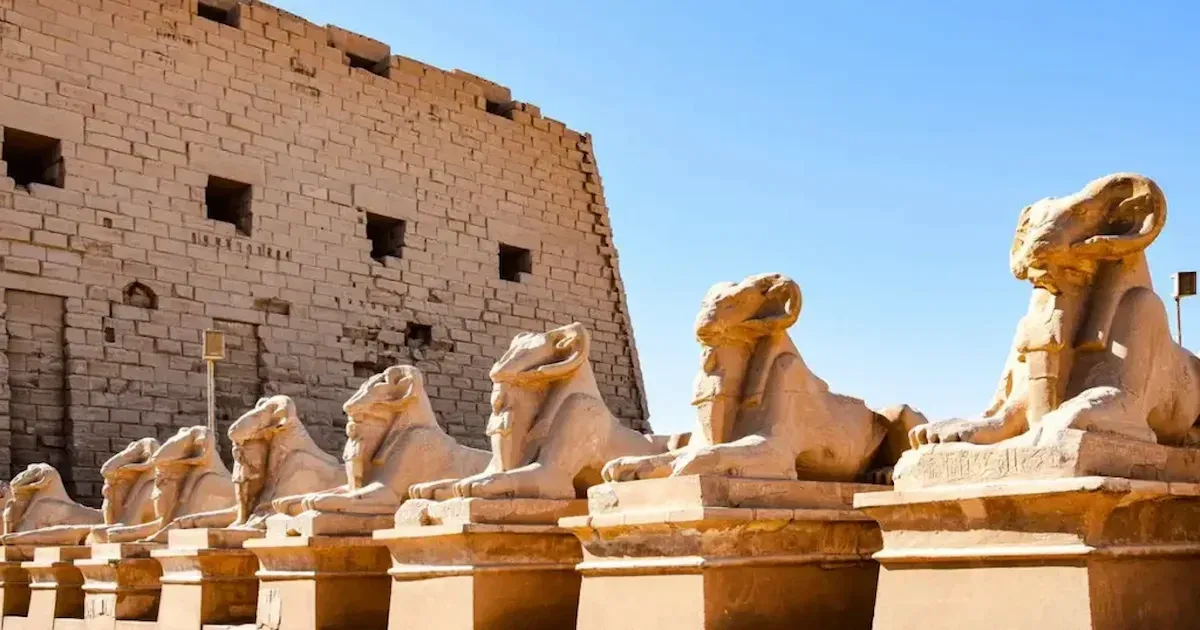
Karnak Temple – Ancient Egyptian Temple in Luxor
History & Significance of Karnak Temple
Origins & Development
The beginnings of the Karnak site date back to the Middle Kingdom (around 2000-1700 BC), but it flourished especially during the New Kingdom (16th–11th centuries BC).
Pharaohs such as Senusret I, Amenhotep I, Thutmose I, Hatshepsut, Thutmose III, Seti I, Ramses II, and many others kept building, enlarging, and decorating the precincts over centuries.
Religious & Political Role
Karnak was not just a religious center; it was also a political symbol of power. Kings used Karnak to legitimize their rule, offer sacrifices, perform rituals etc.
The complex played a central part during the Opet Festival and other annual religious celebrations where the gods were believed to walk from one temple to another through processional routes.
Architecture & Layout Highlights
Karnak is huge. The complex comprises several major precincts, temples, pylons, halls, obelisks, and subsidiary chapels. Key components:
Great Hypostyle Hall in the Precinct of Amun: Massive hall with 134 gigantic columns, some over 20+ meters tall. Stunning reliefs of pharaohs and deities.
The Precinct of Mut & Precinct of Khonsu: smaller but significant precincts dedicated to other gods in the Theban triad.
Obelisks: including ones erected by Hatshepsut and Thutmose I.
Sacred Lake: used for purification rituals.
Pylons and Gates: e.g. the 4th, 5th Pylons, each built by different rulers, showing different art styles, inscriptions, and construction techniques.
Each section shows layers of history: you can see how building methods, decoration styles, religious focus changed over different reigns.
Visitor Information: Hours, Tickets & Access
Here’s a current summary (always verify locally in case of seasonal or official changes):
ItemDetailOpening HoursDaily 6:00 AM – 5:00 PM (last entry usually around 4:30 or 1 hour before closing).Ticket Price (Foreign Adults)~ 450 EGPTicket Price (Students / Children)~ 230 EGP for students with valid ID. Discounts for children.Local / Egyptian PriceAs per the Ministry of Tourism & Antiquities, much lower (Egyptians / Arabs) – check official site (MOTA).Address / LocationEast Bank, Luxor, about 3 km north of Luxor Temple.Last EntryUsually ~ 30 minutes to 1 hour before closing time. Check at entrance.
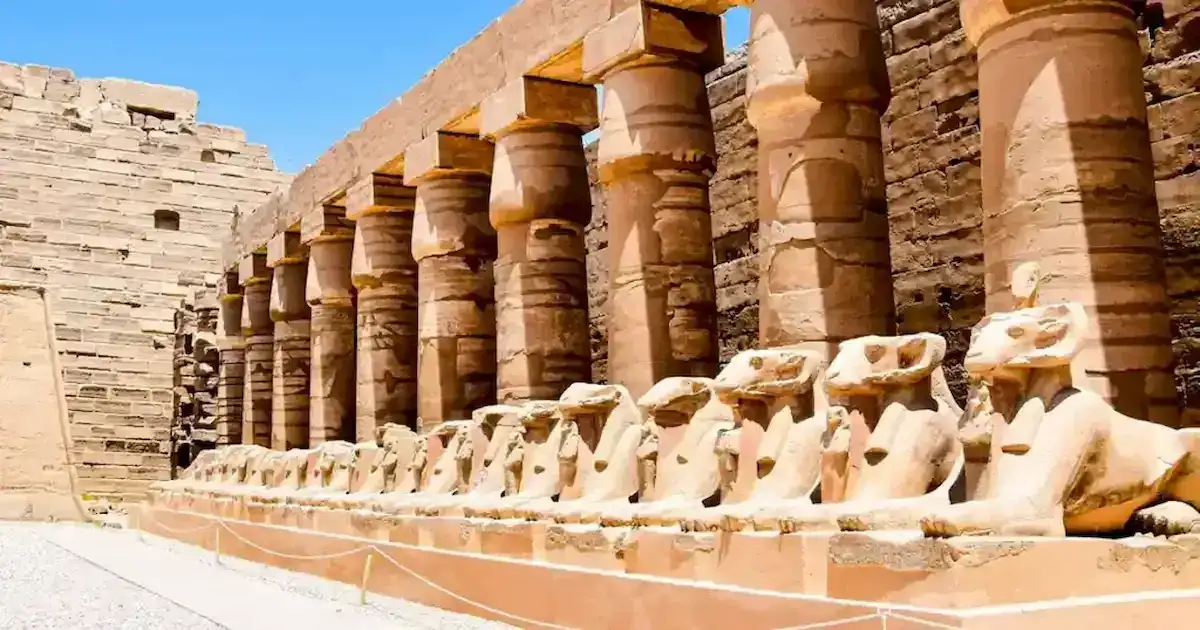
Karnak Temple – Ancient Egyptian Temple in Luxor
Best Time to Visit & Touring Tips
Morning or late afternoon: The light is best, cooler, and less crowded.
Avoid midday when the sun is harsh and reliefs are overexposed.
Bring water, sun protection (hat, sunscreen, sunglasses) and wear comfortable shoes – many of the surfaces are uneven.
Guided tours: Very helpful. A good Egyptologist guide can give context to reliefs, symbolism, and obscure inscriptions.
Sound & Light Show: If available, it’s a dramatic way to see the temple at dusk with lighting and narration. But note: not all parts are well-lit; daytime gives you more detailed view.
Photography: Most photography with mobile devices or regular cameras is allowed. If using professional equipment, check whether special permits are needed.
Dress modestly: shoulders/knees covered is respectful.
How to Get to Karnak Temple & Combine Visits
From your hotel in Luxor, you can take a taxi, ride a horse-drawn carriage (caleche), or use public transportation. It lies on Luxor’s East Bank.
Many Luxor day tours include Karnak Temple along with Luxor Temple, Valley of the Kings, Mortuary Temple of Hatshepsut, and more.
Consider combining with a walk (or carriage ride) along the restored Avenue of Sphinxes, especially toward Luxor Temple.
Nearby Attractions & What to Combine
Luxor Temple – roughly 3 km south; commonly paired in a half-day or day tour.
Mut Temple precinct within the Karnak grounds.
Luxor Museum – many artifacts from Karnak are displayed there.
West Bank sites: Valley of the Kings, Mortuary temple of Queen Hatshepsut, Colossi of Memnon.
Questions Travelers Often Ask (FAQ)
How long should I spend in Karnak Temple?
To see the main highlights (Hypostyle Hall, Sacred Lake, obelisks, and some smaller precincts), expect about 2-3 hours. If you’re deeply interested in inscriptions or want a quiet walk, you might spend up to half a day.
Is there a dress code?
Yes. Modest clothing is recommended (cover shoulders and knees), light breathable fabrics for comfort, especially in hot months.
Can I attend the Sound & Light Show?
Yes, usually nightly or on certain evenings. It’s a separate ticket. Check local schedules. It adds a different atmosphere but doesn’t replace the daytime visit for detail.
Is Karnak Temple accessible for people with mobility issues?
Partially. Main pathways and open courtyards are accessible. But stone floors, steps, uneven terrain and long distances may make it challenging. Guides can help. Use what you need (wheelchair, assistance) but expect some limitations.
What is the best time of year to visit?
Between October and April (winter/spring) for milder temperature. Summers (May-September) are very hot – early morning or late afternoon is best.
Are there official or government sources for the latest ticket prices & hours?
Yes. The Ministry of Tourism & Antiquities (MOTA) publishes official ticket price lists. It’s always good to check their PDF / or the official monuments website for recent changes.
Summary
Karnak Temple is a must-visit for anyone traveling to Luxor. It offers an immense, richly-decorated window into ancient Egyptian religion, art, and architecture. Photographs at sunrise or sunset are magical, and with the right timing (early morning or late afternoon), a guided tour, and a plan for nearby sights, your visit can be unforgettable. Always confirm ticket prices and opening hours just before you go to avoid surprises.