Edfu Temple
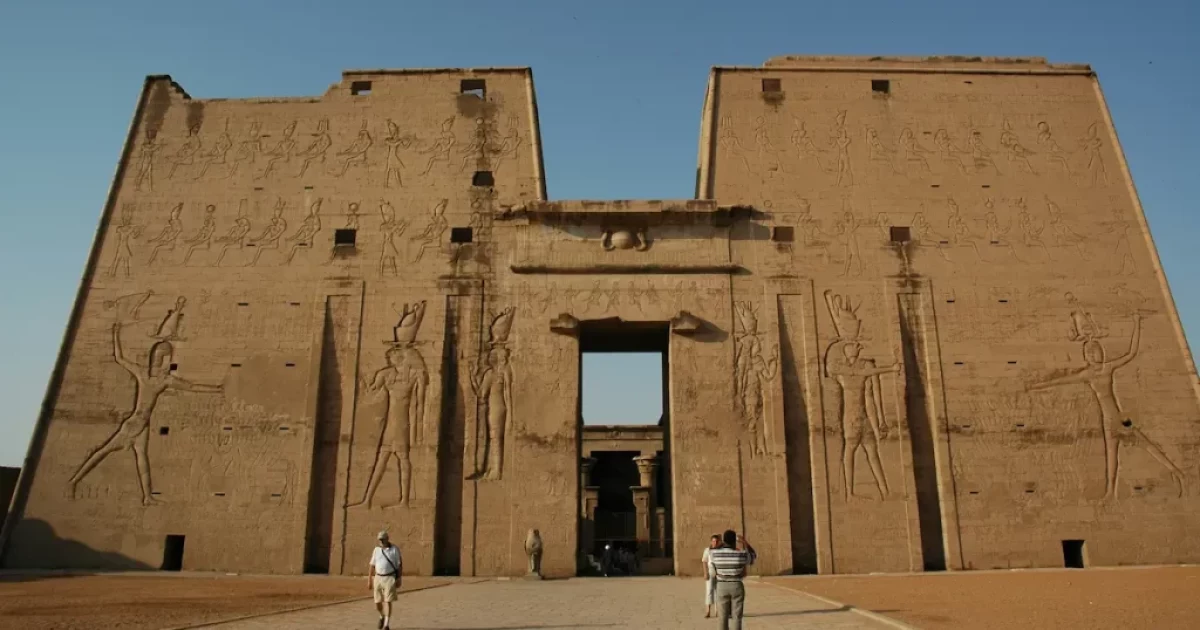
Table of Contents
Among the magnificent temples along the Nile, Edfu Temple Egypt stands out as one of the best-preserved monuments from ancient times. Dedicated to Horus, the falcon-headed god of protection and kingship, this Ptolemaic masterpiece bridges the worlds of myth, art, and history.
Located halfway between Aswan and Luxor, it is a highlight for anyone exploring Things to Do in Egypt — especially those traveling on Nile River Cruises or Luxury Nile Cruises, where Edfu is a key stop along the sacred river.
Let’s uncover what makes Edfu Temple Egypt one of the most captivating temples in all of Egypt.
The History of Edfu Temple Egypt
Origins and Construction
Edfu Temple, also known as the Temple of Horus, was built during the Ptolemaic period between 237 and 57 BCE. It was constructed over nearly 180 years, making it one of the last great temples ever built in ancient Egypt.
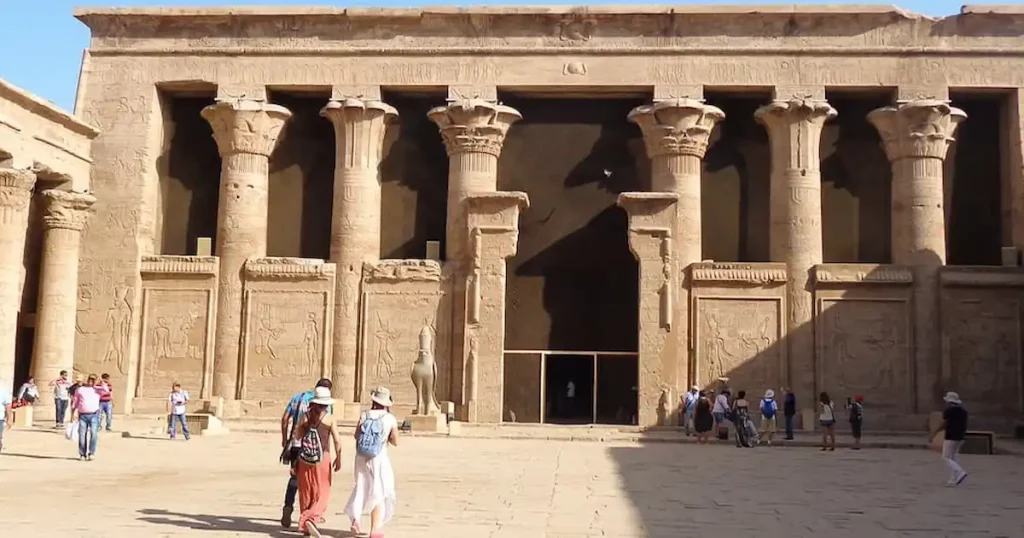
Edfu Temple Egypt showing the grand entrance and Horus statues under the sun
The temple was built on the foundations of an earlier structure from the New Kingdom era, symbolizing continuity between the Pharaonic and Greek eras of Egyptian history.
The Ptolemaic kings, though of Greek descent, deeply respected Egyptian religion and culture. They sponsored grand temples like Edfu to link their rule to the divine lineage of the pharaohs.
Rediscovery
For centuries, the temple lay buried under desert sand and Nile silt until it was excavated in the 19th century by French Egyptologist Auguste Mariette. Today, it stands as one of the most complete and well-preserved ancient temples in all of Egypt — second only to Dendera in terms of condition.
Quick Visitor Information
ItemDetailsLocationEdfu City, between Luxor and Aswan, EgyptOpening HoursDaily: 7:00 AM – 5:00 PMTicket Price (Foreign Visitors)EGP 200Ticket Price (Egyptians/Arabs)EGP 20Recommended Visit Duration1 to 1.5 hoursHow to Get ThereAccessible via Nile Cruises or by car from Aswan/LuxorOfficial Sourceegymonuments.gov.eg
Architectural Marvel: Design and Layout
The Edfu Temple Egypt is a stunning example of Ptolemaic architecture — grand, symmetrical, and rich in symbolic carvings.
1. The Great Pylon
The temple’s façade features one of the largest and best-preserved pylons in Egypt, rising over 36 meters (118 feet) high. Two massive towers flank the entrance, adorned with carvings showing Pharaoh Ptolemy XII striking his enemies before Horus.
At the base stand two magnificent black granite statues of Horus, welcoming visitors into the sacred space.
2. The Courtyard of Offerings
Beyond the pylons lies an open courtyard surrounded by colonnades. This area was used for public offerings and religious ceremonies dedicated to Horus and his consort Hathor.
3. The Hypostyle Halls
Two large halls follow, filled with 32 massive columns intricately decorated with scenes of gods, rituals, and hieroglyphic inscriptions. The halls are dimly lit, creating a mystical atmosphere.
4. The Sanctuary of Horus
At the temple’s heart is the Holy of Holies, where the sacred statue of Horus once stood upon a granite pedestal. Behind it, you’ll find the naos, or shrine, which once held the sacred boat used in festivals.
5. The Roof and Hidden Chambers
Visitors can climb to the temple roof (where allowed) for a breathtaking view of the Nile Valley. Beneath the temple, hidden crypts were used to store sacred objects.
Mythology and Religious Meaning
The Edfu Temple Egypt is dedicated to the divine triumph of Horus over Seth, his uncle and the god of chaos. The inscriptions vividly depict the “Sacred Drama”, which was reenacted during temple festivals every year.
Edfu Temple Egypt showing the grand entrance and Horus statues under the sun
This story — Horus avenging his father Osiris by defeating Seth — symbolized the eternal victory of order over chaos, light over darkness, and the rightful king over usurpers.
The temple served not only as a religious center but also as a school of theology, medicine, and astrology for ancient priests.
Festivals and Rituals at Edfu
Each year, Edfu hosted one of the most significant festivals in Egypt:
The Festival of the Divine Union of Horus and Hathor.
During this event, Hathor’s statue was brought by boat from Dendera Temple to Edfu to unite with her husband Horus in a symbolic marriage. The celebration involved processions, music, incense, and offerings — reinforcing the fertility and harmony of the land.
Even today, visitors can trace the processional route leading from the Nile to the temple gate.
Why Edfu Temple is So Well Preserved
Unlike temples closer to the Nile that suffered from flooding, the Edfu Temple Egypt was buried under desert sand for centuries, protecting it from erosion and human damage.
This natural preservation means that hieroglyphs, reliefs, and architectural details remain remarkably intact, allowing modern travelers to experience the temple almost as it looked 2,000 years ago.
Visiting Experience: What to Expect
Visiting the Edfu Temple Egypt feels like stepping into a living museum.
Here’s what you’ll find during your exploration:
Grand Entrance: The twin Horus statues are among the most photographed in Egypt.
Detailed Reliefs: Every wall tells a story — from offerings to astronomical calendars.
Shadowed Halls: The contrast between light and shadow enhances the temple’s mystery.
Roof Views: Some tours allow rooftop access for a panoramic view of Edfu and the Nile.
Quiet Atmosphere: Compared to Luxor or Aswan, Edfu is tranquil and rarely crowded.
How to Reach Edfu Temple Egypt
Most travelers visit Edfu Temple as part of their Nile River Cruise itinerary. The temple is conveniently located along the Nile between Aswan and Luxor.
Travel Options:
Aswan Day Tours: Many tours from Aswan include Edfu and Kom Ombo Temples in a single day.
By Nile Cruise: The most popular option — stops include Edfu and Kom Ombo.
By Car or Private Tour: About 2 hours from Aswan, or 3 hours from Luxor.
By Train: Edfu has a railway station with services connecting both cities.
Best Time to Visit
The ideal time to explore Edfu Temple Egypt is between October and April, when the weather is cooler and skies are clear.
Morning visits are recommended (before 9:00 AM) for the best lighting and fewer crowds.
Nearby Attractions
After exploring Edfu Temple, you can enrich your experience by visiting nearby sites:
Kom Ombo Temple – dedicated to Sobek and Horus, located north along the Nile.
Philae Temple – a stunning island temple near Aswan.
Unfinished Obelisk – learn about ancient quarrying techniques.
Aswan High Dam – Egypt’s modern engineering marvel.
Nubian Village Tours – cultural encounters along the Nile.
Together, these create an unforgettable journey through Egypt’s timeless river civilization.
Cultural and Historical Importance
Edfu Temple Egypt is not only a historical site — it’s a bridge between Egypt’s Pharaonic and Greek-Roman worlds.
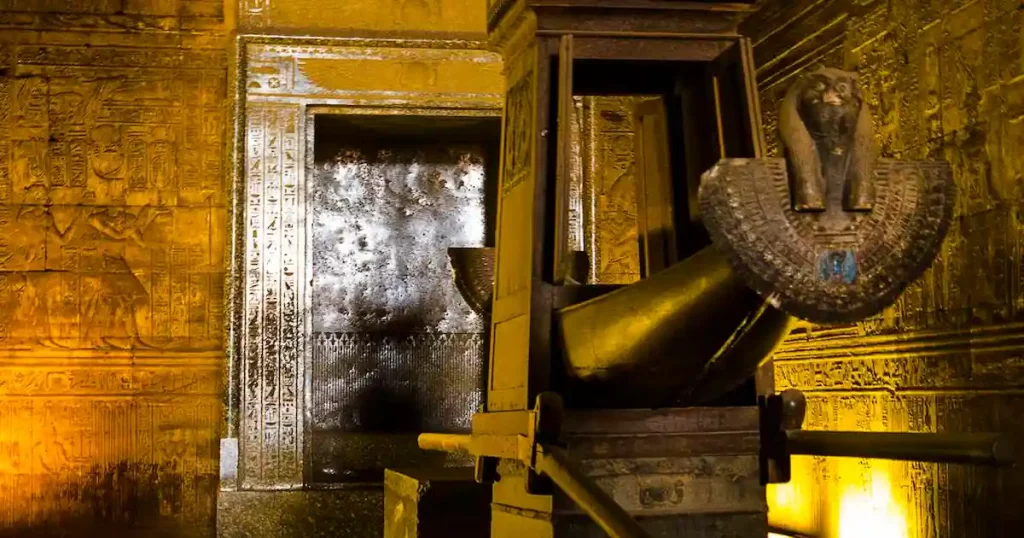
Edfu Temple Egypt showing the grand entrance and Horus statues under the sun
The temple’s inscriptions contain the most complete records of ancient Egyptian religious rituals ever discovered. They’ve helped Egyptologists decode lost temple practices and cosmological beliefs.
Its architectural harmony and spiritual symbolism make it a centerpiece of any Nile Cruise itinerary or Aswan Day Tour.
Tips for Visitors
Bring sunscreen, water, and a hat — the temple is mostly open-air.
Hire a local Egyptologist guide for a deeper understanding of the scenes and myths.
Visit early morning to capture the best photographs with soft sunlight.
Respect local customs and avoid touching the ancient carvings.
Combine your visit with Kom Ombo for a full-day cultural experience.
Educational Insight: What Makes Edfu Special
The Edfu Temple Egypt offers more than beauty — it offers insight.
Its reliefs record how the world was created, how the gods maintained order, and how kings ruled by divine right.
These inscriptions are among the few that survived untouched, making the temple invaluable to historians and archaeologists.
Connection to Nile Cruises and Aswan Itineraries
For travelers on Nile River Cruises, or Luxury Nile Cruises, Edfu Temple is a highlight stop between Luxor and Aswan.
The temple’s placement along the river makes it a perfect midpoint for Aswan Day Tours and a symbolic link between Egypt’s major temple cities.
Many visitors describe it as the “most atmospheric temple on the Nile” — smaller than Karnak but more complete, intimate, and spiritually powerful.
FAQs – Visitors’ Common Questions
Q1. What is Edfu Temple famous for?
It’s the best-preserved temple in Egypt, dedicated to Horus, showcasing complete Ptolemaic architecture and mythology.
Q2. Where is Edfu Temple located?
In Edfu City, between Luxor and Aswan, on the west bank of the Nile.
Q3. How old is Edfu Temple Egypt?
It was built between 237–57 BCE, during the Ptolemaic dynasty.
Q4. Can you visit Edfu Temple from Aswan?
Yes, most Aswan Day Tours and Nile Cruises include Edfu as a major stop.
Q5. What time should I visit?
Early morning (7–9 AM) for the best light and cooler temperatures.
Q6. Is there an entry fee?
Yes — approximately EGP 200 for foreign visitors.
Q7. How long does it take to visit?
Around 1 to 1.5 hours is sufficient to explore the temple thoroughly.
Integrating Edfu Temple Egypt into Your Journey
Whether you’re crafting your itinerary for Things to Do in Egypt or planning an Aswan Day Tour, a visit to Edfu Temple Egypt is essential.
It combines architectural perfection, divine mythology, and authentic ancient energy — all along the timeless waters of the Nile.
From Things to Do in Aswan to luxurious Nile River Cruises, this temple stands as a living testament to Egypt’s enduring devotion to the gods and to beauty itself.