Dendera Temple Egypt
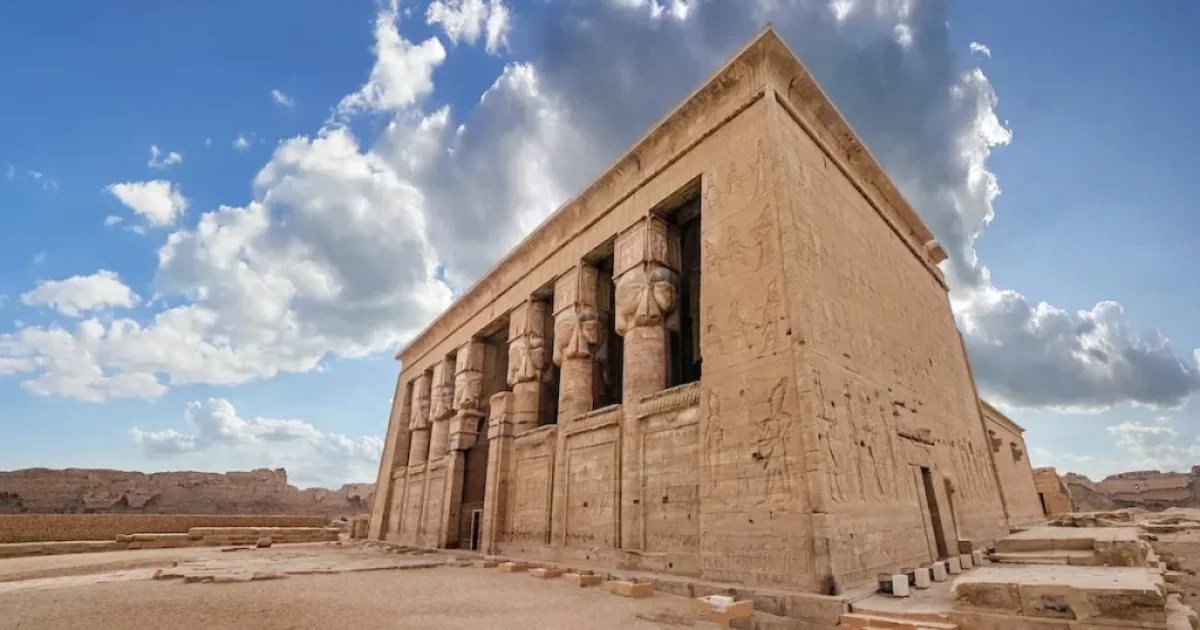
Table of Contents
Located on the west bank of the Nile near Qena, just north of Luxor, the Dendera Temple complex is one of Egypt’s most remarkable and best-preserved ancient sites.
Dedicated to Hathor, the goddess of love, beauty, and music, this temple invites visitors to step into the spiritual heart of ancient Egyptian celebration.
The History of Dendera Temple
The Temple of Hathor at Dendera stands on the site of an even older sanctuary that dates back to the Old Kingdom (c. 2250 BC).
The current temple, however, was constructed during the Ptolemaic and Roman periods (125 BC – 60 AD), when Greek and Roman rulers embraced Egyptian religious traditions.
Commissioned mainly by Ptolemy XII (father of Cleopatra VII), the temple later received its famous ceiling decorations under Roman Emperor Tiberius.
This blend of Greek, Roman, and Egyptian styles makes Dendera unique among all of Egypt’s temples.
Visitor Information
CategoryDetailsOpening HoursDaily: 7:00 AM – 5:00 PMTicket Price (Foreigners)120 EGP (students: 60 EGP)Ticket Price (Egyptians)30 EGP (students: 10 EGP)PhotographyAllowed (no flash inside)Best Time to VisitOctober to April (mild weather)
Architectural Layout of Dendera Temple
The Temple of Hathor is part of a larger sacred complex covering over 40,000 square meters.
Its structure follows the traditional Egyptian temple plan but with unique features that make it exceptional.
1. The Hypostyle Hall
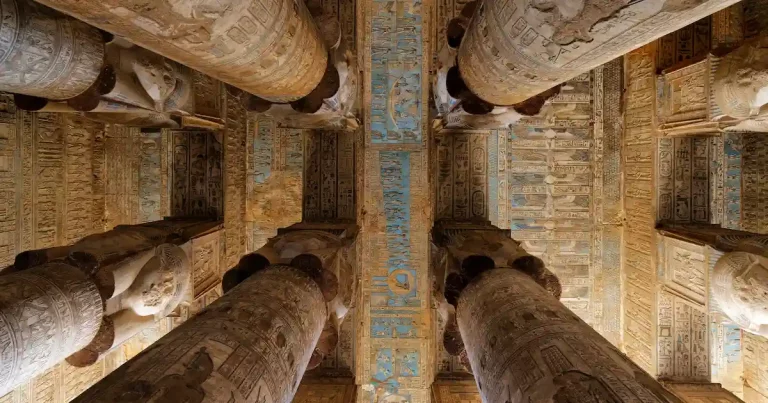
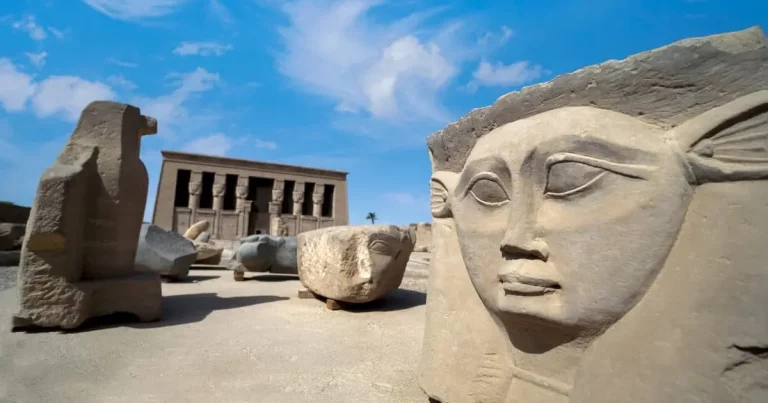
The grand hall at the entrance is supported by 24 towering columns, each crowned with the face of Hathor — a woman with cow ears, symbolizing beauty and motherhood.
The ceiling is covered with vivid astronomical scenes depicting stars, zodiac signs, and the goddess Nut arching over the heavens.
2. The Dendera Zodiac
Perhaps the most famous feature of the temple is the Dendera Zodiac, a carved astronomical ceiling showing constellations and planets.
The original was removed and now resides in the Louvre Museum in Paris, but a detailed replica remains in the temple today.
3. The Inner Sanctuaries
The temple’s rear section houses shrine rooms and storerooms that once held sacred statues and ritual items used in daily worship.
One sanctuary was dedicated to Hathor’s husband, Horus, connecting Dendera with Edfu Temple (linked mythologically through the “Sacred Marriage” festival).
(Internal link: [Edfu Temple])
4. The Crypts
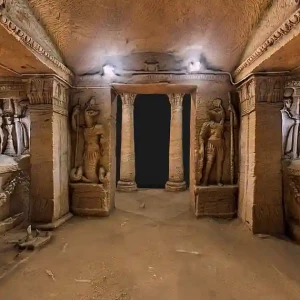
Beneath the temple lie underground crypts, once used to store sacred relics and ceremonial treasures.
Hieroglyphs on their walls include depictions of mysterious rituals, sometimes linked to the so-called “Dendera light relief,” often discussed in modern Egyptology circles.
5. The Rooftop and Osiris Reliefs
Visitors can climb to the roof for a spectacular view of the Nile Valley.
Here, chapels depict Osiris’ resurrection — an ancient symbol of life, death, and rebirth, fittingly placed under Egypt’s bright sun.
The Colors and Art of Dendera
What makes Dendera Temple Egypt truly unforgettable is its astonishing preservation of color.
Many of the original pigments — turquoise, ochre, and lapis — remain visible after 2,000 years, revealing the vibrant palette of ancient Egyptian art.
The interior scenes show festivals, offerings, music, and dance, emphasizing Hathor’s joyful energy.
It’s one of the few temples that lets visitors see ancient Egypt in color, not just in stone.
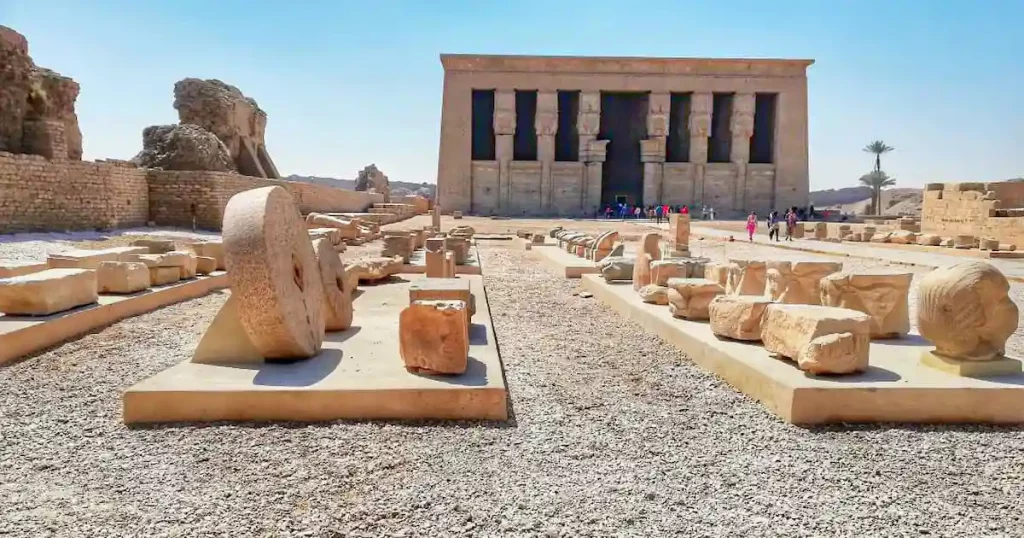
The magnificent Dendera Temple dedicated to Hathor, near Luxor.
Hathor – The Goddess of Love and Joy
Hathor, often depicted with a sun disk between cow horns, was one of the most beloved deities in Egyptian mythology.
She was worshiped as the goddess of love, beauty, music, motherhood, and the sky, often associated with fertility and feminine energy.
Her name literally means “The House of Horus.”
Pilgrims traveled from across Egypt to celebrate festivals at Dendera in her honor, accompanied by music, dancing, and offerings of flowers and perfumes.
What to See at the Dendera Temple Complex
HighlightDescriptionHypostyle Hall24 Hathor-headed columns and celestial ceiling paintingsDendera ZodiacReplica of the ancient astronomical chartOsiris Chapel (Rooftop)Scenes of resurrection and rebirthSanctuary of HathorMain inner shrine of the goddessCrypt ReliefsIntricate carvings of ritual symbolsSacred LakeUsed for purification ritualsBirth House (Mammisi)Dedicated to Hathor and Horus’ divine birth
Tips for Visiting Dendera Temple Egypt
Arrive early to enjoy quiet exploration before tour buses arrive.
Combine Dendera with Abydos Temple for a full-day tour from Luxor.
Bring a hat, sunscreen, and water — the site is mostly open-air.
Hire a local guide to understand the deeper symbolism of the reliefs.
The magnificent Dendera Temple dedicated to Hathor, near Luxor.
Combining Dendera with Other Attractions
Dendera Temple is often combined with:
Edfu Temple and Kom Ombo Temple along Nile Cruises
Photography Tips
Morning light highlights the carvings on the façade.
Use wide-angle shots in the Hypostyle Hall.
The rooftop view captures the temple’s geometry beautifully.
Flash is not allowed inside; bring a camera with good low-light settings.
The magnificent Dendera Temple dedicated to Hathor, near Luxor.
Did You Know?
The temple once housed the Festival of the New Year, celebrating the union of Hathor and Horus.
Many Greek and Roman emperors are depicted offering gifts to Egyptian gods here — proof of cultural blending.
Hidden staircases within the walls allowed priests to reach the rooftop for rituals unseen by the public.
FAQ – Visiting Dendera Temple Egypt
How far is Dendera from Luxor?
About 60 km north (1 hour by car or tour bus).
Is the Dendera Temple still in good condition?
Yes — it’s one of the most complete and best-preserved temples in all of Egypt.
What’s the “Dendera light” theory?
It refers to a mysterious relief in the crypts that some claim depicts ancient technology — though scholars interpret it symbolically as a lotus and snake representing creation.
Can I climb to the roof?
Yes, and it offers incredible views over the temple and surrounding Nile Valley.
Is it worth visiting from Luxor?
Absolutely. Dendera is one of the most underrated sites, ideal for travelers seeking fewer crowds and deeper history.