Colossi of Memnon Luxor
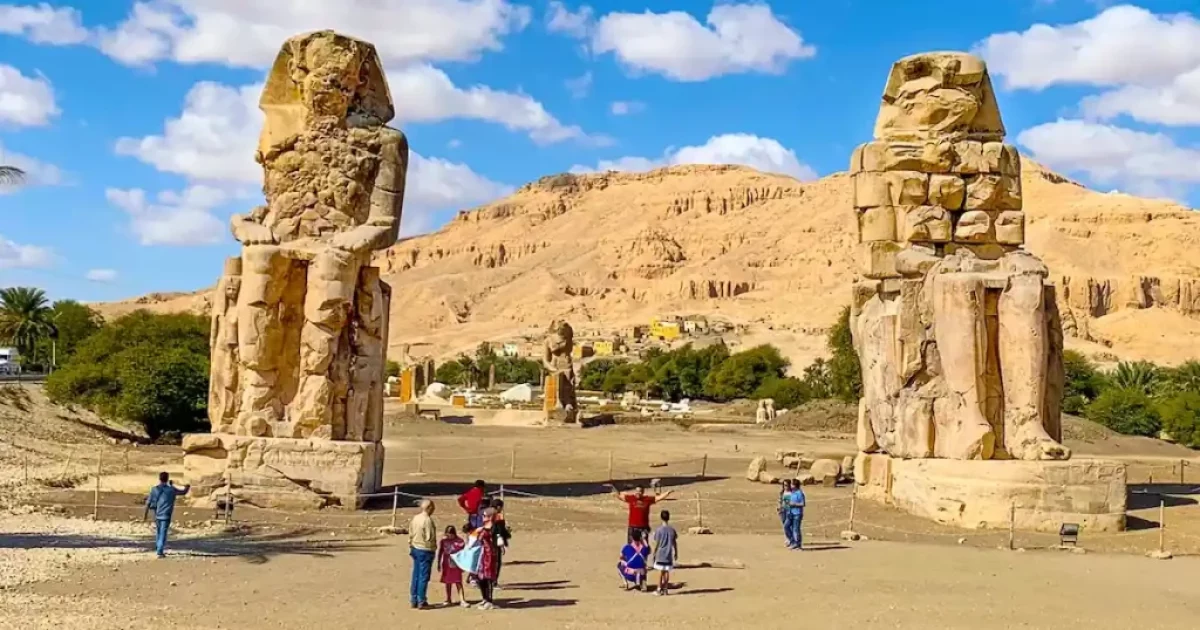
Table of Contents
Standing proudly on the western bank of the Nile, the Colossi of Memnon Luxor are among the most iconic landmarks in Luxor, Egypt. These two gigantic statues, each towering over 18 meters high, have stood for more than 3,400 years, guarding the once-grand Mortuary Temple of Amenhotep III.
Their sheer scale, timeless beauty, and mysterious ancient legend have made them a symbol of Thebes’ (modern Luxor) enduring greatness — and a must-see attraction for anyone exploring Things to Do in Luxor and Things to Do in Egypt.
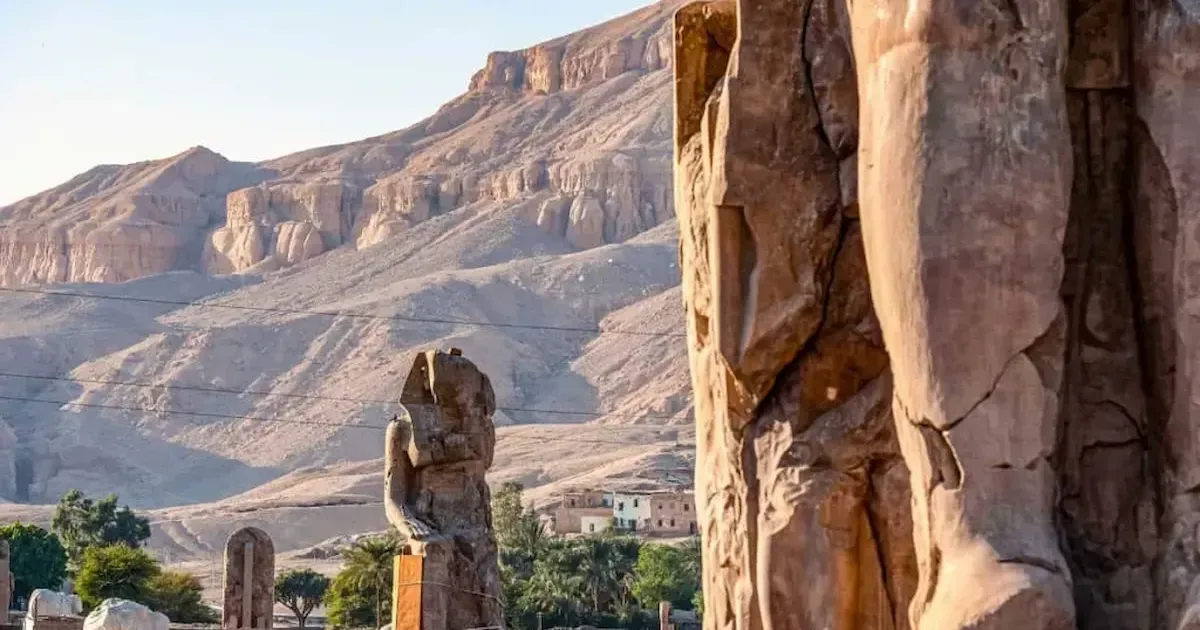
The colossal statues of Pharaoh Amenhotep III at the entrance to his mortuary temple.
History of the Colossi of Memnon
The statues were originally built around 1350 BC during the reign of Pharaoh Amenhotep III, one of Egypt’s most prosperous rulers.
They were positioned at the entrance of his vast mortuary temple, which once covered over 100 acres — the largest temple complex in Thebes before much of it was destroyed by floods and earthquakes.
Each colossus was carved from single blocks of quartzite sandstone transported from quarries near Cairo, over 675 km away — a testament to the ancient Egyptians’ incredible engineering skill.
Who Was Amenhotep III?
Amenhotep III (reigned 1391–1353 BC) presided over Egypt’s golden age of peace and prosperity. His reign saw flourishing art, architecture, and diplomacy.
The Colossi of Memnon were part of his grand project to immortalize his divine kingship and power — just as Ramses II later did at Abu Simbel Temples.
The Legend of the “Singing” Colossus
In ancient times, the northern statue became famous for producing a mysterious “singing” sound at dawn. Ancient travelers, including the Greek historian Strabo and Roman emperor Hadrian, documented hearing the strange musical tone.
The sound was caused by the warming of the stone after sunrise, releasing moisture and creating small vibrations.
After a Roman restoration in 199 AD, the phenomenon stopped — but the legend remained, linking the statue to Memnon, a mythical Ethiopian hero of the Trojan War. That’s how the statues became known as the Colossi of Memnon.
Location and Visitor Information
DetailsInformationLocationWest Bank of Luxor, near the Theban NecropolisOpening HoursDaily: 6:00 AM – 6:00 PMEntrance FeeFree (open-air site)Best Time to VisitEarly morning or sunset for best lightingNearest AttractionsValley of the Kings, Hatshepsut Temple, Ramesseum
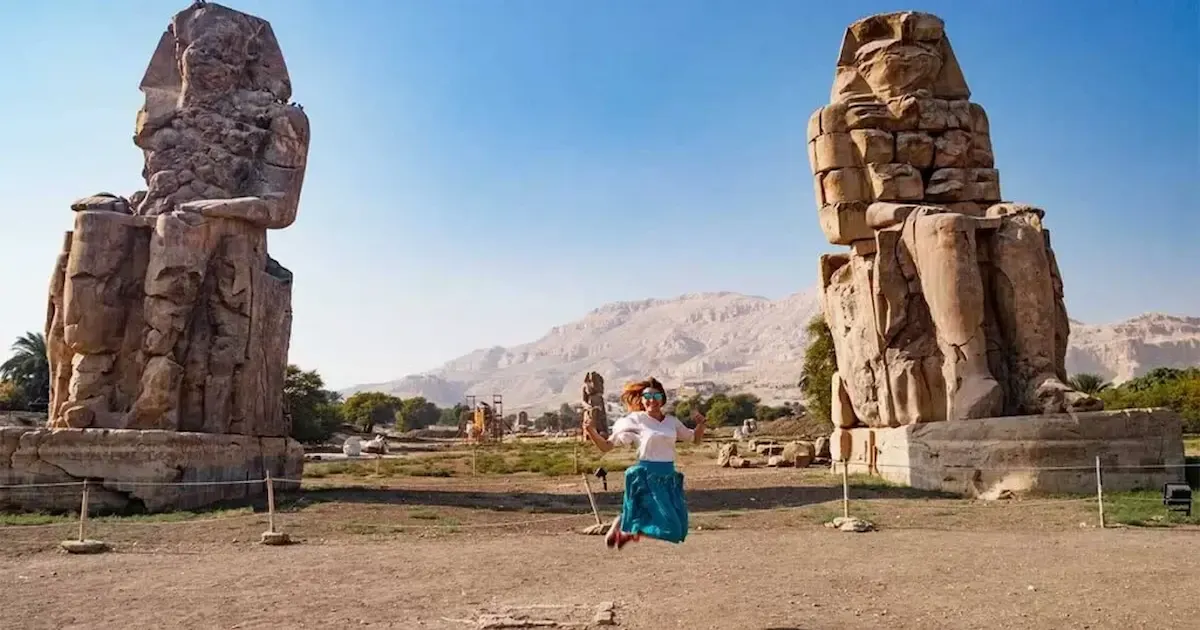
The colossal statues of Pharaoh Amenhotep III at the entrance to his mortuary temple.
Architecture and Symbolism
Each statue depicts Pharaoh Amenhotep III seated on his throne, hands resting on his knees, facing east toward the rising sun — symbolizing rebirth and eternity.
Beneath the pharaoh’s legs are smaller carvings representing his mother, wife, and the god Hapi, while the base displays scenes of Nile deities and offerings.
Originally, the statues were part of a grand entrance complex with pylons, courtyards, and sanctuaries dedicated to Amun-Ra. Today, only the two colossal guardians remain, yet they continue to embody the majesty of Egypt’s ancient empire.
Nearby Attractions
The Colossi of Memnon serve as a perfect starting point for exploring Luxor’s West Bank — home to some of Egypt’s most important archaeological treasures:
Valley of the Kings – the burial site of pharaohs, including Tutankhamun.
Temple of Hatshepsut – the elegant terraced mortuary temple of Egypt’s most powerful queen.
Ramesseum Temple – another mortuary temple, built by Ramses II.
Medinet Habu – temple complex of Ramses III, known for its vivid reliefs.
Best Photography Tips
Sunrise or sunset gives the statues their most dramatic lighting.
Capture the mountain backdrop for scale and atmosphere.
Early morning offers fewer crowds and golden tones perfect for wide shots.
Drone photography is not permitted without official permits from Egypt’s Ministry of Antiquities.
How to Visit the Colossi of Memnon
Most visitors include the Colossi as part of Luxor Day Tours or West Bank excursions that also visit nearby temples and tombs.
You can reach them by:
Private car or taxi from central Luxor (≈20 minutes).
Organized tour buses with licensed guides.
Hot air balloon rides over Luxor — offering a breathtaking aerial view of the statues and surrounding temples at sunrise.
Travel Tips for Visitors
Entrance is free, but consider hiring a local guide to explain the site’s historical context.
Combine your visit with a West Bank itinerary: Valley of the Kings → Hatshepsut Temple → Colossi of Memnon.
Bring sunscreen, water, and a hat — there’s no shade around the statues.
Morning visits are cooler and offer stunning light for photography.
Modern Excavations and Discoveries
Ongoing archaeological projects around the Colossi of Memnon are revealing more of Amenhotep III’s original temple complex.
Excavations led by the Colossi of Memnon and Amenhotep III Temple Conservation Project have uncovered dozens of statues, columns, and sphinxes, shedding light on the temple’s original splendor.
FAQ – Colossi of Memnon, Luxor
What are the Colossi of Memnon?
They are two massive statues of Pharaoh Amenhotep III, built around 1350 BC to guard his mortuary temple on Luxor’s west bank.
Why are they called “Memnon”?
The name comes from a Greek myth associating the statues’ “singing” with the hero Memnon, son of Eos (the dawn goddess).
Can you visit the Colossi for free?
Yes, the site is open and free to the public.
When is the best time to visit?
Early morning or sunset — when the lighting is ideal and temperatures are mild.
What else should I see nearby?
Combine it with Valley of the Kings, Temple of Hatshepsut, and Medinet Habu for a full West Bank experience.