Civilization Museum Cairo
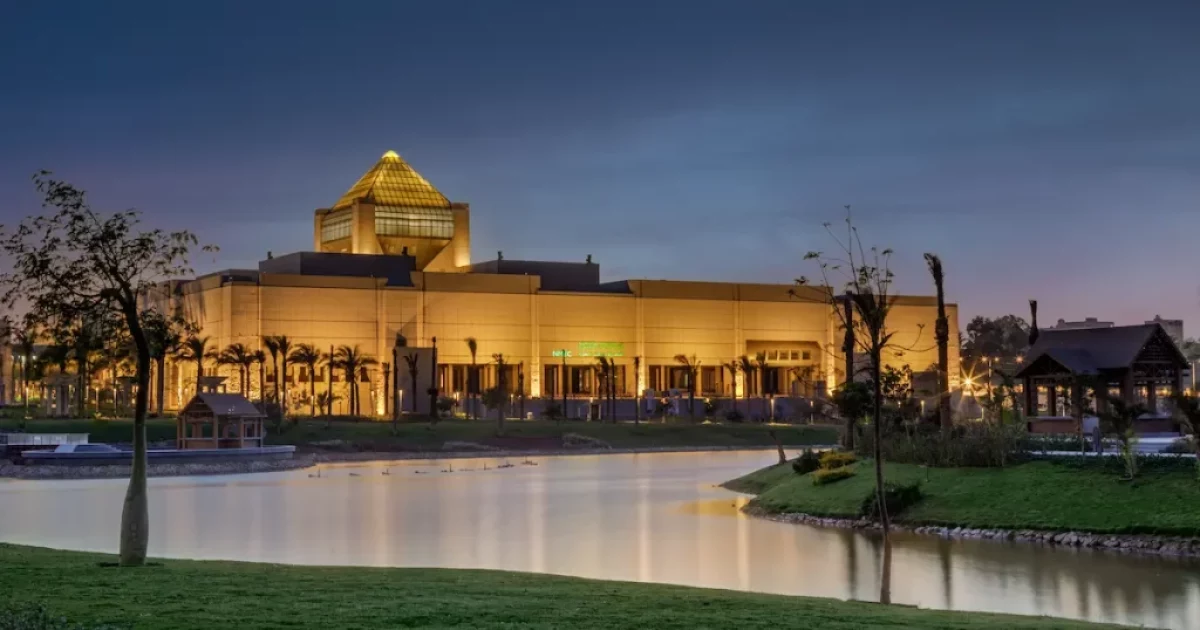
Table of Contents
Nestled in the historic heart of Fustat, Cairo’s first Islamic capital, the Civilization Museum Cairo stands as a bridge between Egypt’s glorious past and its vibrant present.
Opened to the public in 2021, NMEC quickly became one of the top Things to Do in Egypt, offering visitors an unmatched journey through 7,000 years of Egyptian history — from prehistoric times to the modern era.
National Museum of Egyptian Civilization Cairo exterior with Fustat Lake view
Whether you’re exploring Things to Do in Cairo, joining Cairo Day Tours, or sailing on Nile River Cruises, the museum is a must-visit for anyone eager to experience the full story of Egyptian civilization in one place.
Overview: A Museum Beyond Time
Unlike traditional museums that focus on a single period, the Civilization Museum Cairo tells the entire story of Egypt.
Spanning more than 23,000 square meters of exhibition space, the museum showcases over 50,000 artifacts, carefully arranged in chronological and thematic galleries.
From the first Neolithic settlements to the dazzling Pharaonic, Greco-Roman, Coptic, Islamic, and contemporary eras — every section immerses you in the evolution of Egypt’s culture, science, and art.
Quick Visitor Information
ItemDetailsLocationAl Fustat, Cairo, EgyptOpening HoursDaily: 9:00 AM – 5:00 PM (last entry 4:30 PM)Ticket Price (Foreign Adults)EGP 240Ticket Price (Egyptians/Arabs)EGP 60Royal Mummies Hall AccessAdditional ticket: EGP 100 (foreigners)Websitenmec.gov.egRecommended Visit Duration2–3 hoursHow to Get ThereBy car, Uber, or organized Cairo Day Tours; 15 minutes from downtown CairoPhotographyAllowed (no flash inside Royal Mummies Hall)
The Vision Behind the Museum
The NMEC was conceived as Egypt’s first museum dedicated to the full sweep of Egyptian civilization — not just the Pharaonic era.
It was designed with help from UNESCO and leading Egyptian archaeologists to create an institution that reflects both Egypt’s cultural heritage and modern identity.
When the museum opened, it symbolized Egypt’s renewed commitment to preserving its history while making it accessible to future generations.
The Royal Mummies Hall: A Journey into Immortality
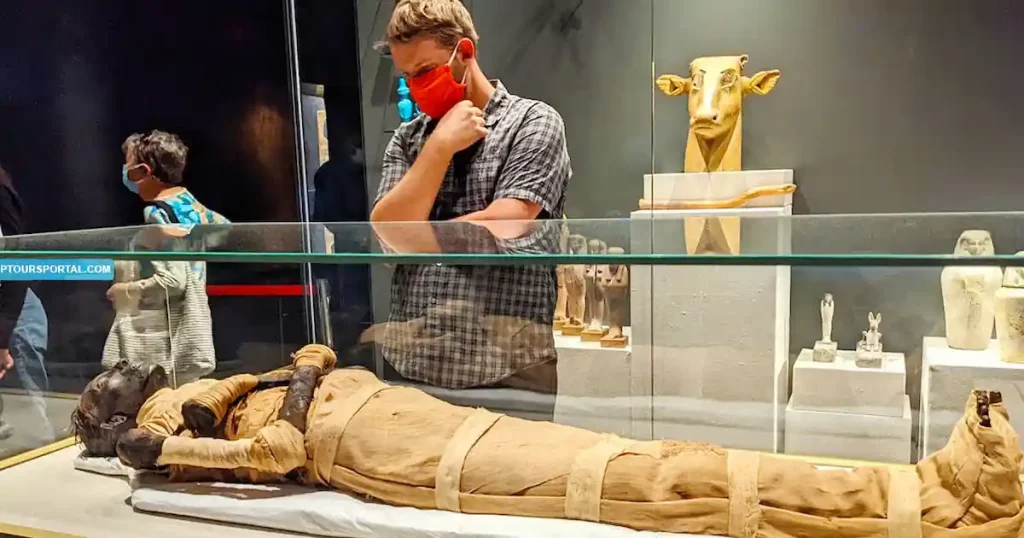
The Royal Mummies Hall is undoubtedly the highlight of the Civilization Museum Cairo — and the very reason thousands of visitors flock here daily.
National Museum of Egyptian Civilization Cairo exterior with Fustat Lake view
The Legendary Pharaohs
In a stunning display of reverence and scientific preservation, the hall houses 22 royal mummies, including:
Ramses II, the great warrior-king of the New Kingdom
Queen Hatshepsut, the only female pharaoh of Egypt
Seti I and Thutmose III, among others
These ancient rulers were transferred to NMEC in the Royal Golden Parade, a global spectacle in April 2021 that captured the world’s attention.
Atmosphere & Design
The hall is intentionally dimly lit, with a quiet, almost sacred ambiance. Visitors descend into a subterranean space designed to evoke the tombs of the Valley of the Kings, giving an intimate and respectful encounter with Egypt’s royal ancestors.
National Museum of Egyptian Civilization Cairo exterior with Fustat Lake view
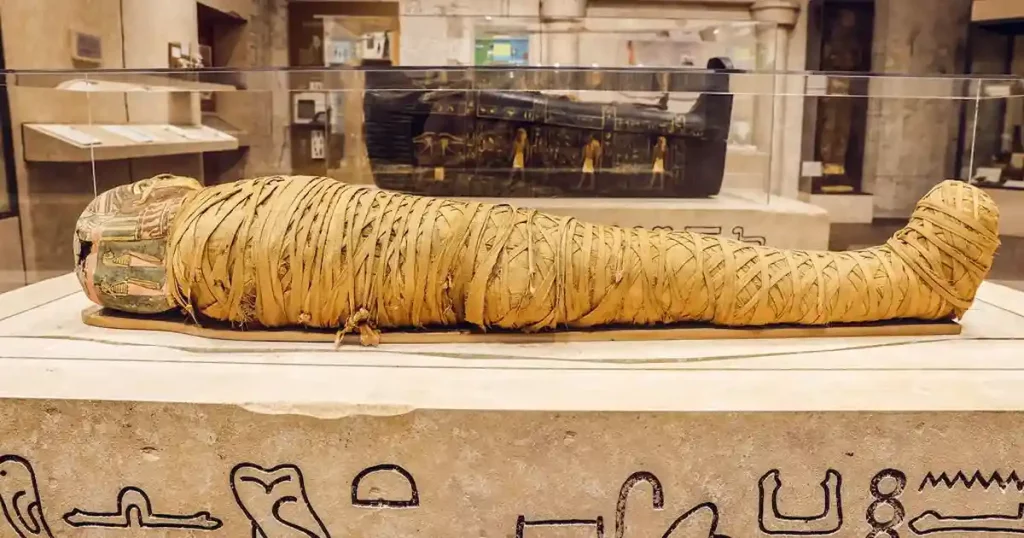
Each mummy is presented with biographical panels, X-rays, and scientific information revealing how they lived — and how they were preserved for eternity.
Permanent Galleries: Egypt Through the Ages
Beyond the Royal Mummies, NMEC’s permanent galleries offer a chronological journey through six major historical phases.
1. Prehistoric Gallery
Here, you’ll find stone tools, pottery, and ornaments that date back to Egypt’s earliest inhabitants, over 10,000 years ago. These exhibits show how early Egyptians adapted to the Nile’s cycles, laying the foundations for civilization.
2. Pharaonic Gallery
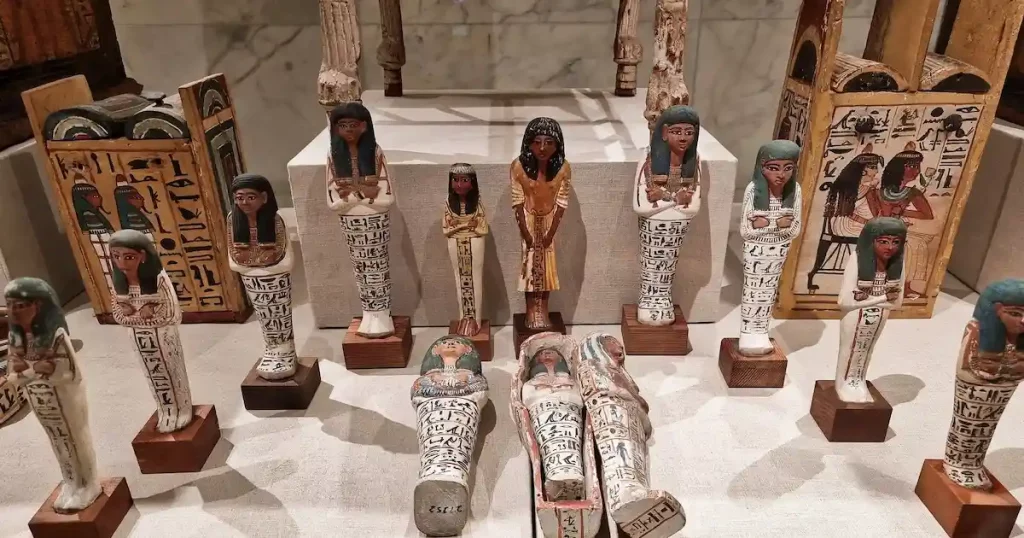
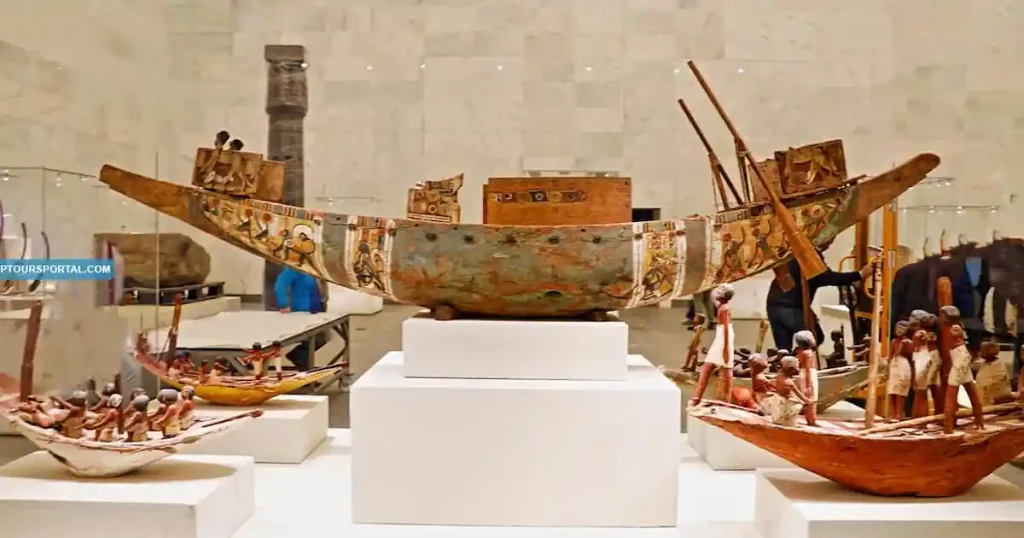
Artifacts from dynasties 1–30 bring to life the age of the pyramids, temples, and tombs. Highlights include sarcophagi, statues, and household items revealing daily life in ancient Egypt.
3. Greco-Roman Gallery
A blend of Egyptian tradition and Hellenistic influence — colorful portraits, coins, and jewelry showcase Egypt’s multicultural identity under Greek and Roman rule.
4. Coptic Gallery
Displays icons, manuscripts, and textiles from early Christian Egypt, reflecting the faith and artistry of the Coptic community.
5. Islamic Gallery
A beautifully curated section featuring calligraphy, ceramics, and metalwork — celebrating Cairo’s Islamic Golden Age and its influence on architecture and science.
6. Modern and Contemporary Egypt
The final section highlights Egypt’s modern identity — from the 19th-century reforms to today’s art, cinema, and culture — showing how ancient heritage continues to shape national pride.
Architecture: A Harmony of Modernity and Tradition
The National Museum of Egyptian Civilization Cairo is an architectural masterpiece designed by Egyptian architect El-Ghazali Kosseiba.
Its minimalist, geometric design blends modern lines with traditional inspiration, echoing the pyramidal forms of ancient Egypt.
Overlooking Ain El Sira Lake, the museum’s reflection shimmers in the water, symbolizing the continuity of civilization — a fitting metaphor for Egypt’s eternal spirit.
Temporary Exhibitions and Events
NMEC regularly hosts temporary exhibitions, cultural events, and educational programs.
Past exhibitions have focused on:
Ancient Egyptian fashion and cosmetics
The art of mummification
The influence of the Nile on daily life
Contemporary Egyptian art and photography
National Museum of Egyptian Civilization Cairo exterior with Fustat Lake view
These dynamic exhibitions make NMEC more than a static museum — it’s a living cultural center connecting past and present.
Educational and Interactive Experiences
The museum is designed not only for tourists but also for scholars, students, and families.
It includes:
Children’s Museum with interactive learning
Multimedia halls offering digital storytelling
Workshops on archaeology and restoration
Auditoriums for lectures and film screenings
Such initiatives position NMEC as a hub of cultural education and innovation.
How to Reach NMEC
By Taxi or Uber: Around 20 minutes from Tahrir Square or downtown Cairo.
By Metro: Nearest stop – El Fustat Station (New Line).
As part of Tours: Many Cairo Day Tours and Things to Do in Cairo itineraries include NMEC alongside the Egyptian Museum and Citadel of Salah El-Din.
If you’re arriving via Nile River Cruises that dock in Cairo, NMEC is easily accessible and an excellent cultural stop.
Ticket and Visitor Tips
Buy tickets online via the official site: nmec.gov.eg.
Separate ticket required for the Royal Mummies Hall.
Arrive early (9–10 AM) for fewer crowds.
Photography allowed everywhere except the Mummies Hall.
Dress comfortably — the museum involves walking across large galleries.
Allow at least 2 hours to explore fully.
NMEC and the Egyptian Museum in Tahrir: What’s the Difference?
Travelers often wonder whether they should visit both.
While the Egyptian Museum in Tahrir houses an enormous collection of Pharaonic artifacts, the Civilization Museum Cairo focuses on the narrative of Egyptian identity across all eras.
Together, they complement each other perfectly — one shows Egypt’s archaeological treasures; the other shows Egypt’s evolving civilization.
Best Time to Visit
The museum is open all year, but the most pleasant time to explore Cairo’s outdoor and indoor attractions is between October and April, when the weather is cooler.
Visiting in the afternoon allows you to enjoy sunset views over Ain El Sira Lake, a tranquil bonus after the museum experience.
Link with Nile Cruises and Cultural Journeys
For travelers on Nile Cruises, Luxury Nile Cruises, or Nile River Cruises, NMEC often marks the beginning or end of their Egyptian adventure.
It offers a comprehensive understanding of the history behind the temples, tombs, and monuments encountered along the Nile.
That’s why many tour operators include NMEC as part of Things to Do in Egypt and Cairo Day Tours itineraries.
Nearby Attractions
After visiting NMEC, consider exploring:
Coptic Cairo (Hanging Church, Ben Ezra Synagogue)
Amr Ibn El-As Mosque, Egypt’s oldest mosque
The Egyptian Museum Cairo in Tahrir
Saladin Citadel and Mohamed Ali Mosque
Khan El Khalili Bazaar for traditional crafts
These nearby sites make it easy to spend a full day discovering Cairo’s layered history.
Sustainability and Preservation
NMEC also plays a major role in heritage conservation.
Its laboratories specialize in restoring artifacts and researching preservation techniques.
Solar panels and eco-efficient systems reflect Egypt’s move toward sustainable tourism — a model for future museums in the region.
FAQs – Visitors’ Common Questions
Q1. What is the National Museum of Egyptian Civilization Cairo famous for?
It’s the only museum in Egypt that covers all historical periods and houses the Royal Mummies Hall with 22 mummified kings and queens.
Q2. Where is the NMEC located?
In Fustat, Old Cairo, near Ain El Sira Lake.
Q3. How much is the ticket?
Foreign adult tickets cost around EGP 240, with a separate ticket for the Royal Mummies Hall.
Q4. Is photography allowed?
Yes, but without flash inside the Mummies Hall.
Q5. How long should I plan for my visit?
At least 2–3 hours to explore both the permanent and temporary exhibitions.
Q6. Is it suitable for families?
Absolutely — the museum offers interactive children’s areas and educational programs.
Q7. Can I visit NMEC as part of Cairo Day Tours?
Yes. It’s often included alongside the Egyptian Museum Cairo and Saladin Citadel in guided tours.
Why You Shouldn’t Miss NMEC
The Civilization Museum Cairo isn’t just another museum — it’s the living heartbeat of Egyptian identity.
From the sacred stillness of the Royal Mummies Hall to the innovation of modern exhibitions, NMEC connects every visitor to Egypt’s timeless story.
If you’re curating your list of Things to Do in Egypt or planning Cairo Day Tours, this is a destination that transforms curiosity into awe.
It’s where Egypt’s kings, queens, and people — past and present — finally meet.