Abydos Temple Egypt
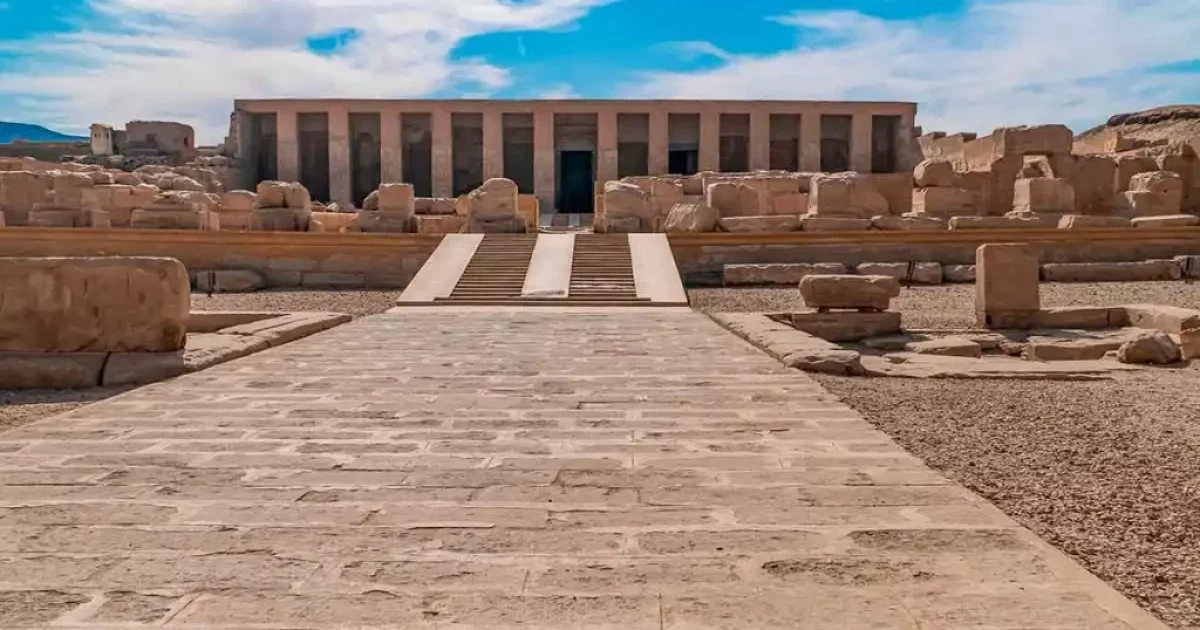
Table of Contents
Hidden in the desert north of Luxor, the Abydos Temple Egypt is one of the most sacred and historically significant temples in all of Egypt.
Built by Pharaoh Seti I and completed by his son Ramses II, this temple was dedicated to Osiris, god of the afterlife, and became a major pilgrimage center for ancient Egyptians seeking spiritual renewal.
Today, Abydos stands as a masterpiece of ancient art and architecture — a temple where mythology, religion, and history intertwine.
History and Significance of Abydos Temple Egypt
Abydos was revered as the burial place of Osiris, making it one of ancient Egypt’s most sacred cities.
The Temple of Seti I was constructed around 1290 BC, during Egypt’s New Kingdom (19th Dynasty), as a spiritual monument to honor the divine cycle of life, death, and resurrection.
Pharaoh Seti I personally supervised much of its construction, ensuring the carvings and hieroglyphs achieved unmatched precision and elegance.
After his death, his son Ramses II (Ramesses the Great) completed the outer sections and added his own temple nearby — the Temple of Ramses II at Abydos.
Location and How to Get There
Location: Abydos, Sohag Governorate, about 160 km north of Luxor.
How to Visit:
A popular day trip from Luxor, often combined with Dendera Temple.
Accessible via private car, tour bus, or Nile Cruise extensions that include Abydos.
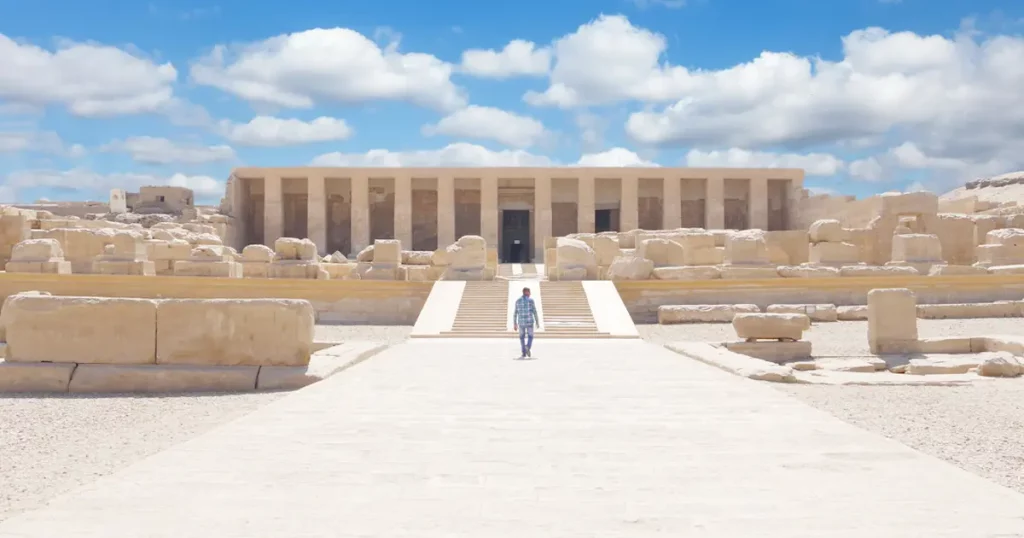
The sacred Abydos Temple dedicated to Seti I and the god Osiris.
Visitor Information
CategoryDetailsOpening Hours8:00 AM – 5:00 PMTicket Price (Foreigners)120 EGP (students: 60 EGP)Ticket Price (Egyptians)30 EGP (students: 10 EGP)PhotographyAllowed (no flash inside)Best Time to VisitOctober – April
Architecture and Layout of Abydos Temple Egypt
The Temple of Seti I at Abydos differs from most Egyptian temples because of its L-shaped design and seven sanctuaries, each dedicated to a major deity.
1. The Grand Entrance and Hypostyle Hall
Visitors enter through massive stone gates leading to a hall supported by 24 columns, covered in colorful reliefs showing Seti I offering to the gods.
The artistry here is considered among the finest in ancient Egypt, with lines so delicate they look painted rather than carved.
2. The Seven Sanctuaries
The temple features seven chapels dedicated to:
Osiris, Isis, Horus, Amun, Ra-Horakhty, Ptah, and Seti I himself.
Each chapel contains detailed scenes of rituals and offerings, symbolizing Seti’s devotion to the gods and his hope for divine immortality.
3. The Osiris Chapel and the Afterlife Myth
The Osiris chapel is the spiritual core of the temple, showing scenes of resurrection, fertility, and eternal life.
This reinforces Abydos’s role as the mythical burial site of Osiris, the god of rebirth.
4. The Abydos King List
On the temple’s west wall lies the Abydos King List, a chronological record of 76 pharaohs from Egypt’s early dynasties up to Seti I.
It serves as a vital historical document, preserving the names of rulers long lost to history — a treasure for Egyptologists worldwide.
Symbolism and Art of Abydos Temple Egypt
The artistry inside Abydos Temple Egypt is simply breathtaking.
Unlike other temples where reliefs were carved deeply and roughly painted, here the scenes are shallow-carved and meticulously polished.
The colors, still visible after 3,000 years, glow with spiritual intensity — blues, reds, and golds symbolizing divine energy.
The temple’s carvings represent the mystical journey of the soul, the divine kingship of Seti I, and the eternal triumph of Osiris over death.
Osiris – The God of Resurrection
In Egyptian mythology, Osiris ruled the underworld and symbolized eternal life.
Abydos was believed to be the place where his head was buried, and every Egyptian longed to visit this site at least once in their life — much like a spiritual pilgrimage.
Festivals of Osiris were held annually here, involving symbolic processions, chanting, and sacred reenactments of his resurrection.
What to See at Abydos Temple Egypt
HighlightDescriptionHypostyle HallIntricately carved pillars with colorful reliefsOsiris ChapelCentral shrine dedicated to the god of the afterlifeAbydos King ListWall inscription listing 76 Egyptian pharaohsSanctuary of Seti IA rare chapel dedicated to the pharaoh himselfTemple of Ramses IINearby temple with grand war scenes and hieroglyphsOsireionSubterranean temple believed to represent the tomb of Osiris
Tips for Visiting Abydos Temple Egypt
Combine with Dendera Temple for a fascinating day trip.
Hire a local Egyptologist guide to explain the symbolic scenes.
Bring a camera with low-light capability for interior shots.
Visit early to avoid heat and tour crowds.
Abydos Temple Egypt and Its Connection to the Afterlife
The Osireion, located behind the main temple, is one of Abydos’s most mysterious structures.
Built of massive granite blocks and partially submerged, it resembles the mythical “Primeval Mound” from which life first emerged.
Many believe it represents the symbolic tomb of Osiris, marking Abydos as a gateway between the world of the living and the dead.
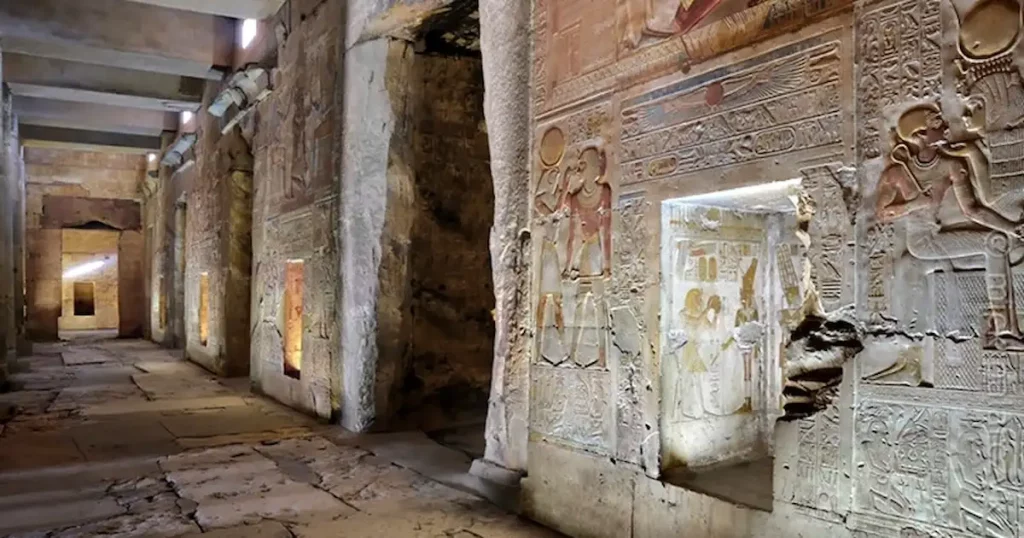
The sacred Abydos Temple dedicated to Seti I and the god Osiris.
Did You Know?
Abydos Temple Egypt was rediscovered in modern times by Flinders Petrie, the father of Egyptian archaeology.
The Abydos helicopter relief, a carving that some claim resembles modern technology, is simply a palimpsest — overlapping hieroglyphs that create illusions.
Ramses II used Abydos as a spiritual center for his family’s royal cult.
FAQ – Visiting Abydos Temple Egypt
How far is Abydos from Luxor?
Around 160 km (about 2.5 hours by car).
Who built Abydos Temple?
It was commissioned by Pharaoh Seti I and later completed by Ramses II.
What is the Abydos King List?
It’s an invaluable chronological list of 76 pharaohs from Egypt’s early dynasties, carved inside the temple.
Why is Abydos important?
It was the spiritual capital of ancient Egypt, devoted to Osiris and the afterlife.
Can Abydos be visited in one day from Luxor?
Yes, most tours combine Abydos and Dendera Temples in a full-day trip.
Abydos Temple Egypt - FAQ
Your questions about this tour, answered.
How far is Abydos from Luxor?
Who built Abydos Temple?
What is the Abydos King List?
Why is Abydos important?
Can Abydos be visited in one day from Luxor?